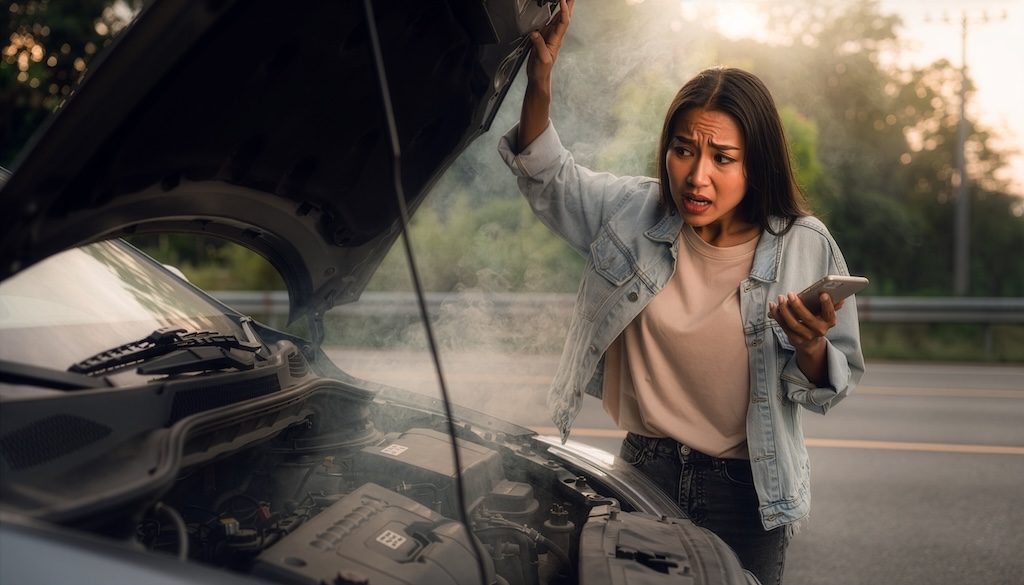
It’s 7:45 am. You’re in the driveway in Hornsby with a meeting at North Sydney at 9 am. You turn the key. Nothing. Or a click. Or a groan that dies halfway through the crank. Whatever the sound, the result is the same: your car isn’t starting, and your morning just became considerably more complicated.
A car that won’t start is one of those problems that tends to arrive at the worst possible moment. Fortunately, most cases of a car not starting in Sydney come down to a small number of common causes, and working through them in a logical order usually gets you to an answer quickly. Here’s exactly what to do, from the moment you realise there’s a problem through to deciding whether to call a mobile mechanic, roadside assistance, or try a jump start.
Step 1: Assess Your Safety and Immediate Situation
Before doing anything else, take stock of your location. If you’re on a Sydney motorway or busy road, safety is the priority before any mechanical diagnosis. Activate your hazard lights immediately. If you can safely move the car further off the road, do so. If you’re on the M1, M7, or similar, and cannot get the car off the carriageway, stay in the vehicle with your seatbelt on until roadside assistance arrives.
If you’re in your driveway, car park, or a quiet street, none of this applies, and you can skip to the diagnostic steps. However, if you’re in traffic, you need to deal with safety first.
Step 2: Identify What Is and Isn’t Happening When You Turn the Key
The sounds and symptoms you hear when you turn the ignition tell you a lot before you’ve looked at anything.
- Nothing at all, no sound, no response: suggests a completely dead battery, a blown main fuse, or an ignition system fault.
- A single loud click, no crank: typically a starter motor fault, or a battery with enough charge to trigger the solenoid but not crank the engine.
- Rapid clicking: almost always a flat or very low battery.
- The engine cranks but doesn’t fire: neither the battery nor the starter is working; the issue is fuel, ignition, or a sensor fault.
- The engine cranks slowly and struggles: low battery charge or a battery that’s failing under load.
Note also whether any dashboard warning lights are behaving unusually. No lights at all when you turn the key to the accessory position means the battery is completely flat or there’s a connection issue. All lights on and staying on after cranking suggests a more complex fault.
Step 3: Basic Checks You Can Do Before Calling Anyone
A few quick checks can sometimes resolve the problem immediately or rule out obvious causes before you call for help.
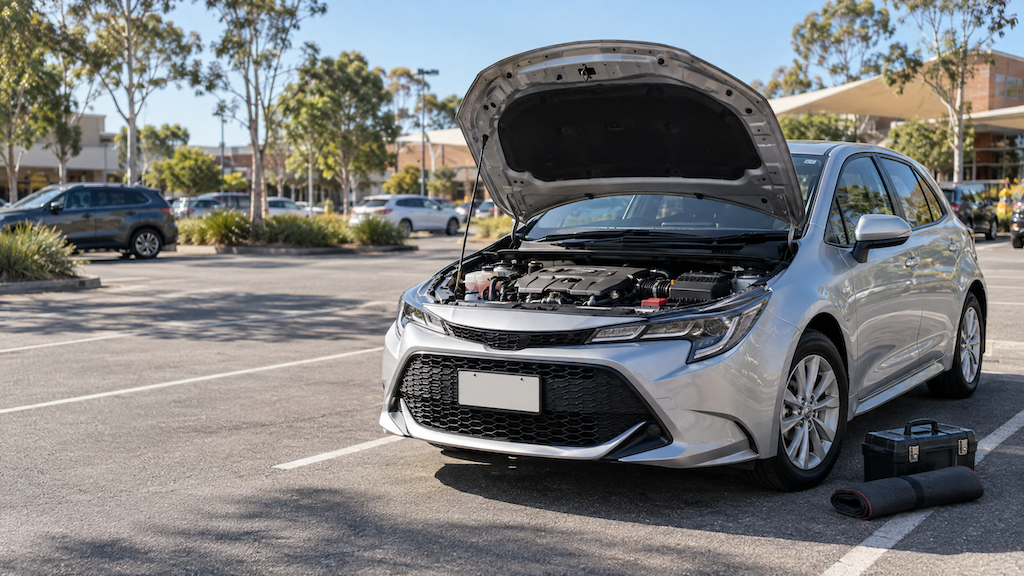
Check the battery terminals. Open the bonnet and look at where the battery cables connect to the battery. White or blue-green corrosion crust on the terminals can interrupt the electrical connection enough to prevent starting, even with a healthy battery. If you have a cloth or a small brush and some water, cleaning corrosion off the terminals can restore a clean connection.
Check the gear selector. Automatic cars won’t start unless the selector is in park or neutral. If the car is in drive, it will not turn over. Also, check that the handbrake is engaged and that you’re pressing the brake pedal fully during the start attempt, which some models require.
If the car has a key fob for immobiliser disabling and the fob battery is low, the immobiliser may not disengage cleanly. Try holding the fob closer to the ignition barrel and attempt the start again. This solves more starting problems than people expect.
Check the fuel gauge. It sounds basic, but running out of fuel on a Sydney commute is more common than it should be, and a car that cranks strongly but doesn’t fire with the fuel light on is telling you clearly what’s wrong.
Step 4: Jump Starting Safely — What to Know Before You Try
If the symptoms point to a flat battery, a jump start may get you running again. But a few things are worth knowing before you start connecting cables.
Modern vehicles with complex electronics are more sensitive to incorrect jump-starting than older cars. Connecting cables in the wrong order or to the wrong terminals can damage sensitive electronics. The correct sequence is always: positive to positive on the flat battery, positive to positive on the donor battery or jump pack, negative to the donor battery or a metal earth point on the flat battery car, away from the battery itself, not to the flat battery’s negative terminal directly.
After connecting, run the donor vehicle or let the jump pack charge for two to three minutes before attempting to start the flat vehicle. If it starts, run it for at least 20 to 30 minutes of driving to allow the alternator to recharge the battery before turning the engine off again. Turning the car off shortly after a jump start and then expecting it to start again usually results in the same flat battery problem immediately.
If the car starts but the battery warning light remains on during driving, the alternator may not be charging correctly. Get it checked before the battery runs flat again.
Step 5: When to Call a Mobile Mechanic Rather Than Roadside Assistance
Roadside assistance is useful for getting the car to a workshop. A mobile mechanic is useful for diagnosing and fixing the problem at your location without the car needing to go anywhere.
If the car won’t start and you’re at home or at work, calling a mobile mechanic is often the faster and more efficient option. They can come to your location, test the battery and alternator properly, and in most cases replace the battery on-site if that’s what’s needed. You’re back on the road without any towing, without any workshop visit, and without any logistics to coordinate.
Roadside assistance makes more sense when you’re in a location where a mobile mechanic can’t safely or practically work, a live motorway lane, for example, or when the fault is something more complex that requires workshop equipment to address.
If the car won’t start and you genuinely have no idea why, a mobile mechanic with a diagnostic scan tool can connect to the car’s onboard system and read any fault codes logged, which is often the fastest path to an answer.
The Most Common Reasons Sydney Cars Fail to Start
In order of frequency for Sydney conditions:
- Flat or failed battery: accounts for the majority of no-start calls. Sydney summer heat accelerates battery degradation, and short commuter trips don’t always give the alternator enough run time to recharge the battery fully between starts
- Starter motor failure: the starter either fails to engage or fails under load. Common on higher mileage vehicles or those where the battery has repeatedly run the starter hard on a weak charge
- Alternator failure: the car started fine all week, then died after a longer drive with a heavy electrical load. A classic sign that the alternator has stopped charging
- Fuel delivery fault: car cranks normally but doesn’t fire. It can be a failed fuel pump, a blocked fuel filter, or a pressure regulator fault
- Immobiliser or key fault: particularly common on vehicles where the key fob battery is old, or the transponder is starting to fail
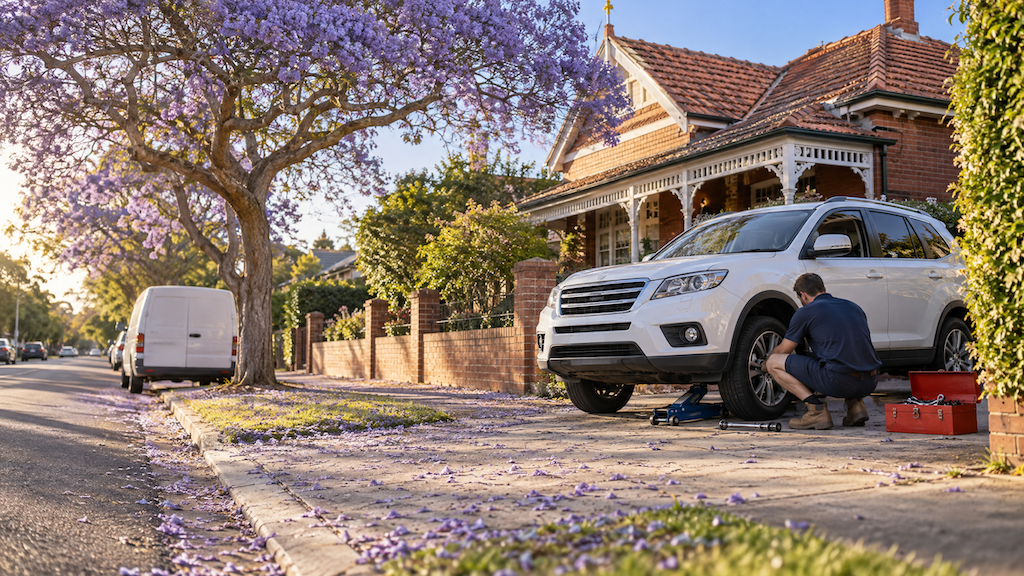
- Flat tyre noticed only after the car won’t move: technically not a starting fault, but often the actual blocker for the morning’s plans
How Mr Tune Handles Sydney No-Start Calls
A no-start call is one of the most common things we deal with at Mr Tune, and it’s also one of the situations where mobile mechanics genuinely shine. We come to your location, run a full diagnostic, test the battery, alternator, and starter, read any fault codes, and in most cases, resolve the issue on-site without you needing to do anything except let us know where you are.
Same-day and next-day bookings are available across Sydney. If you’re stuck right now and need someone, get in touch, and we’ll tell you honestly what we can do and when.
Frequently Asked Questions: What to Do When Your Car Won’t Start in Sydney
Is it safe to push-start a modern automatic car in Sydney? No. Push starting, or bump starting, only works on manual transmission vehicles. Attempting to push-start an automatic can damage the transmission. If you have an automatic and the battery is flat, a jump start is the appropriate approach. If the battery is too far gone for a jump start, you need a replacement battery before the car will start reliably.
How long should I run my car after a jump start to recharge the battery? At minimum, 20 to 30 minutes of actual driving at varying engine speeds, not idling. The alternator charges the battery most effectively above idle, so driving rather than sitting still is more efficient for recharging. In Sydney’s stop-start traffic, this takes longer than it does on an open road. If the battery is genuinely flat rather than just discharged from a short trip, it may need a dedicated battery charger for a full recharge rather than just alternator charging.
Should I call a mobile mechanic or roadside assistance when my car won’t start at home? If you’re at home or in a safe, accessible location, a mobile mechanic is usually the better call. Roadside assistance gets the car to a workshop, where it joins a queue, and you need to sort transport both ways. A mobile mechanic diagnoses and fixes the issue at your location, without any towing and without you going anywhere. For the most common no-start cause, a flat or failed battery, a mobile mechanic can have you back on the road within an hour in most cases.
Can a mobile mechanic come to a Sydney motorway, or is there a restriction? For a live motorway lane, roadside assistance with tow capability and emergency lighting is more appropriate for safety reasons. For a motorway rest area, a breakdown bay, or a service centre, a mobile mechanic can attend. If you’re in a breakdown bay on the M5 or M7, for example, a mobile mechanic can come to you. The key factor is whether the location allows safe working access.
My car won’t start at a shopping centre after hours. What should I do? Call a mobile mechanic if you’re in a safe location and the centre’s car park is accessible. Most outdoor and multi-storey carparks are accessible to service vehicles. Describe the symptoms clearly when you call so the mechanic can bring the most likely parts needed. For underground carparks with restricted height access or security-locked after hours, a roadside assist tow may be the only practical option to get the car somewhere workable.
The engine cranks fine, but the car just will not fire. What is usually causing this? A strong crank with no start rules out the battery and starter motor. The most common causes in this scenario are a failed fuel pump, which you may also notice as a lack of the usual brief hum from under the car when you first turn the key to accessories, a crank position sensor fault, a failed ignition coil pack, or a security system fault preventing the injectors from firing. A diagnostic scan will usually identify the fault code quickly.
Mr Tune is a Sydney-based mobile mechanic. We work with clients across Sydney to ensure your car runs as smoothly as possible. Get in touch with us to see how we can help you.