One of the most common questions people ask before booking a mobile mechanic is whether they can actually fix the problem at their location, or whether the visit will end with a referral to a workshop anyway. It’s a fair question. The answer depends on the job, and it’s worth being specific about what falls into which category.
The list below covers eight of the most common car issues that a qualified mobile mechanic can diagnose and resolve on-site, whether that’s your driveway in Kellyville, your office carpark in the CBD, or a quiet street in Newtown. For each one, the explanation details what the job entails, why it can be done without a workshop hoist, and what the process should look like.
1. Flat Tyre Repair and Tyre Replacement at Your Location
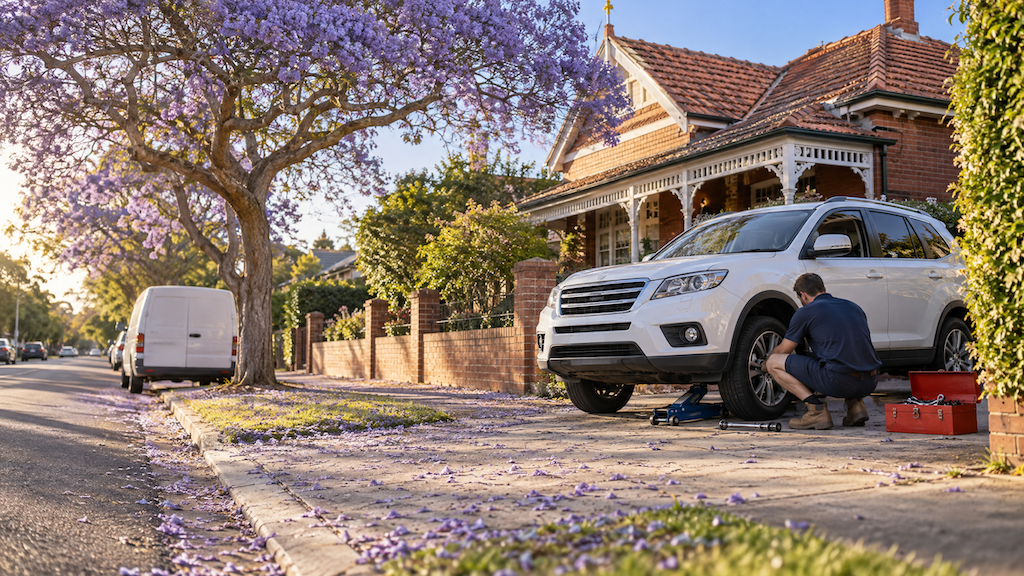
A flat tyre is the most obviously mobile-mechanic-friendly car problem. There’s no engine component to access, no hoist needed, and the tools required, a jack, wheel brace, and either a plug kit or a replacement tyre, are straightforward to transport.
A mobile mechanic can assess whether the flat is from a puncture that can be repaired or damage that requires a full replacement. For repairable punctures, a professional plug-and-patch repair is more reliable than the temporary sealant products most drivers have in their boots. For tyres that are damaged beyond repair, a mobile mechanic can often source and bring a replacement tyre to your location as part of the booking, fitting it on-site.
For drivers who have already fitted the spare and are running on a compact temporary spare, a mobile mechanic can bring the correct tyre, fit it, and have you back on a full set rather than a speed-restricted space-saver.
2. Car Battery Replacement Without the Workshop Visit
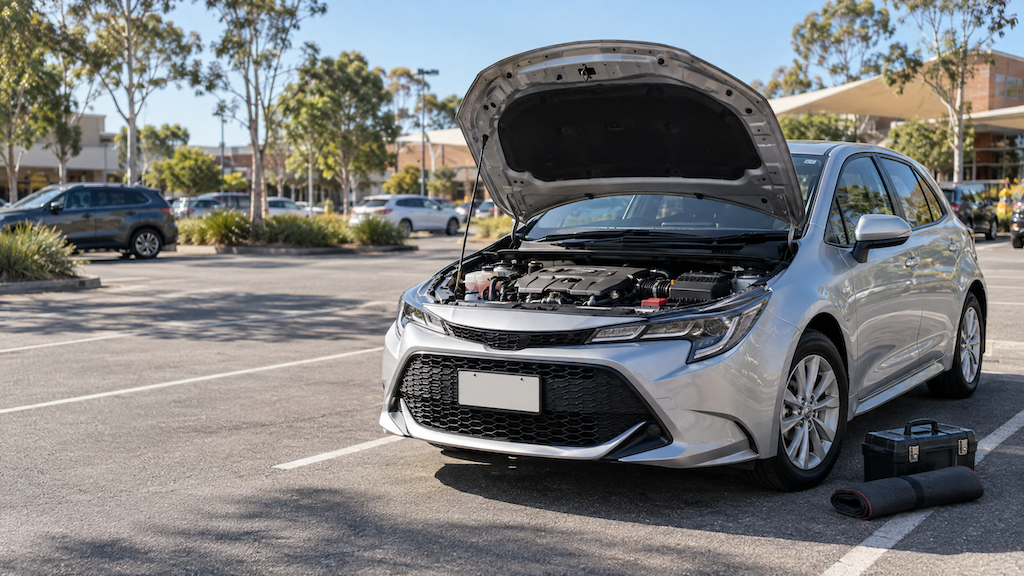
Battery replacement is one of the most common on-site jobs mobile mechanics perform across Sydney. Most batteries are accessible under the bonnet with standard tools and can be swapped in 30 to 45 minutes without any hoisting or specialist equipment.
The process involves testing the current battery under load to confirm it’s the problem rather than the alternator or another charging system fault, sourcing the correct replacement battery for the vehicle, and fitting it with all connections clean and secure. The battery type, group size, cold cranking amps, and terminal configuration must match the vehicle’s specification, which a professional will know or look up rather than guessing.
Some newer vehicles require a battery registration procedure after replacement, where the car’s battery management system is informed that a new battery has been fitted, so it adjusts charging accordingly. This is done via a diagnostic scan tool. It’s an easy step to miss if someone is swapping batteries without the right equipment.
3. Brake Pad and Rotor Replacement on Your Driveway
Brake pad replacement is one of the most common mobile mechanic jobs and is entirely feasible without a workshop. The wheels come off, the calliper is unbolted, the old pads are removed, new ones are fitted, and the assembly is reinstalled. For most vehicles on most driveways in Sydney, this takes one to two hours for a full front or rear axle.
Rotor replacement, when the discs have worn below minimum thickness or are warped, involves removing the calliper and bracket to slide the old rotor off and fit a new one. This is also achievable on-site. A mobile mechanic cannot machine or resurface rotors without a lathe. However, in most cases, replacement is the recommended approach anyway, once a rotor has worn to the point of needing attention.
After any brake work, the braking system needs to be bled if fluid work is involved, and the callipers need to be pumped back up before the car is driven. A thorough mobile mechanic will also check brake fluid condition and calliper slide pins as part of the job.
4. Engine Fault Code Diagnostics and Sensor Replacement
Dashboard warning lights are the most common reason people call a mechanic without knowing exactly what they require. A mobile mechanic with a professional-grade diagnostic scanner can connect to the vehicle’s OBD-II port, read every fault code stored across all systems, and interpret what those codes mean in the context of how the car is actually running.
Many warning light causes are due to sensor failures. Oxygen sensors, mass airflow sensors, throttle position sensors, crankshaft position sensors, and temperature sensors are all relatively accessible components that can be tested and replaced on-site. The scan tool reading confirms the fault, the test confirms the component, and replacement typically takes less than an hour for the most common sensors.
More complex engine management faults may require further investigation or component testing beyond what can be done on-site. A good mobile mechanic will clearly explain which category you’re in, rather than attempting work that needs workshop conditions.
5. Full Log Book Service and Oil Change at Your Home or Workplace
A standard logbook service is designed for exactly this kind of work. No hoisting required. The oil and filter change, fluid checks and top-ups, filter replacements, battery test, brake inspection, tyre check, and visual inspection that make up a standard service interval are all achievable with a well-stocked service van.
The same applies to a general service for vehicles not on a logbook schedule. Oil and filter, air filter, cabin filter, fluid top-ups, and a thorough inspection are all on-site jobs. Most standard logbook services take between 90 minutes and two and a half hours, depending on the vehicle and the specific interval requirements.
6. Cooling System Top-Up, Hose Replacement, and Minor Repairs
Cooling system issues ranging from a low coolant level through to a split hose or a leaking hose clamp can be dealt with on-site in most cases. A mobile mechanic can pressure-test the cooling system to identify leaks, identify failed hoses visually and with pressure testing, and replace radiator hoses, heater hoses, and fittings at your location.
What can’t always be done on-site is a full radiator replacement on vehicles where the radiator position requires significant disassembly of surrounding components, or a water pump replacement on some engine configurations where access requires removing timing covers. But for the hose replacements and coolant flushes that are the most common cooling system maintenance tasks, on-site is entirely practical.
7. Starter Motor Replacement at Your Location
Starter motor replacement is something most drivers assume needs a workshop, but in the majority of vehicles, it’s accessible from above or the side of the engine bay without requiring the car to be raised on a hoist. Some starter motors are located in positions that make them awkward but manageable from underneath without full hoist access.
For vehicles where the starter is in an accessible location, a mobile mechanic can disconnect the battery, remove the old starter, fit a new one, reconnect everything, and have the car start correctly within one to two hours. The job is straightforward once you have the right replacement unit and the correct tools. A diagnostic check before the replacement confirms the starter is actually the fault rather than a battery or wiring issue.
8. Alternator Diagnosis and Replacement On-Site
Alternator diagnosis is primarily electrical and is well within the scope of mobile mechanic tools. A combination of battery voltage tests at rest, voltage tests with the engine running, and a current output test under load gives a clear picture of whether the alternator is charging correctly.
Alternator replacement involves removing the drive belt, disconnecting the electrical connections, unbolting the alternator, fitting the new unit, and reassembling. On most vehicles, this is accessible from above the engine bay. Some engine configurations have the alternator in a lower position, which can make it more awkward on-site, but in the majority of common Sydney vehicles, it’s an on-site job.
What a Mobile Mechanic Cannot Do Without Workshop Equipment
Being clear about this is part of how mobile mechanics earn and maintain trust. Some jobs simply require equipment that isn’t practical to transport or operate outside a workshop setting.
- Work requiring a full vehicle hoist: deep undercarriage access, full exhaust replacement, complex lower suspension work, and some transmission jobs.
- Wheel alignment: requires a fixed alignment bay with laser measuring equipment.
- Tyre fitting and balancing on bare rims: requires a tyre mounting machine and a wheel balancer.
- Air conditioning full regas systems: some units are portable, some are not.
- Engine rebuilds and cylinder head machining.
A reputable mobile mechanic will be upfront about which category your job falls into. If it can be done on-site, it will be. If it can’t, they’ll tell you that honestly rather than attempting it inappropriately or giving you a vague answer.
Book an On-Site Fix With Mr Tune Across Sydney
At Mr Tune, we carry the tools and parts for all eight of the jobs above. When you book, we confirm what the job involves and come prepared to complete it at your location. No unnecessary workshop trips, no half-done assessments that require a second visit somewhere else.
If a job turns out to be outside what we can do on-site, you’ll know that at the diagnostic stage, with a clear explanation of what’s needed and where to go from there.
Frequently Asked Questions About On-Site Car Repairs in Sydney
How long does a typical on-site repair take at my home or workplace in Sydney? It depends on the job. A battery replacement takes 30 to 45 minutes. A brake job on one axle is typically one to two hours. A standard logbook service takes one and a half to two and a half hours. Engine diagnostics with a straightforward sensor replacement can be done in under an hour. When you book, a good reputable mechanic will provide a time estimate, ensuring you can plan your day accordingly.
Does a mobile mechanic carry parts with them, or do I need to source the parts myself? For common parts like batteries, oil filters, air filters, and brake pads for popular vehicle makes, most mobile mechanics carry stock or can source and bring parts to the job as part of the booking. When you book, provide the vehicle make, model, year, and engine size so the mechanic can confirm parts availability and bring what’s needed. For less common vehicles or unusual fault parts, there may be a short lead time for sourcing.
Can a mobile mechanic work in my building’s underground carpark? Often yes, with some practical considerations. Standard underground carparks with typical clearance allow a service van to access the space. Security access may need to be arranged through building management. Some carparks have rules about mechanical work being performed on-site, which is worth checking with your body corporate or building manager beforehand. If the car park is accessible and work is permitted, a mobile mechanic can operate there.
Are on-site repairs covered by a warranty or guarantee? Reputable mobile mechanics stand behind their work. Parts typically carry the manufacturer’s warranty, which applies regardless of where the part is fitted. Labour warranty varies by provider but commonly covers the repair for a defined period. Ask about the warranty terms on the specific job when you book with Mr Tune. Always ensure you receive an invoice that documents the work done and parts used as a record for any future warranty reference.
What should I do if my car breaks down on a Sydney motorway and I need help quickly? First, safely move to the emergency lane or breakdown bay if possible and activate hazard lights. Call for roadside assistance if the vehicle needs to be towed or if you’re in a live traffic situation. Once you’re in a safe, accessible location, a mobile mechanic can come to you for diagnosis and repair. For breakdown situations on major motorways, the process is usually: get safe, remove the car from the live lanes, then deal with the mechanical problem, either on-site or after a short tow to a suitable location.
What happens if an on-site repair takes longer than originally estimated at my location? Good communication is the right answer here. If a mobile mechanic encounters something during a job that adds time, for example, a bolt that’s corroded and difficult to remove, or a secondary issue discovered during the repair, they should let you know immediately and discuss the impact on time and cost before continuing. No reputable mobile mechanic should spring a significantly different outcome on you at the end of a job without keeping you informed throughout.
Mr Tune is a Sydney-based mobile mechanic. We work with clients across Sydney to ensure your car runs as smoothly as possible. Contact us today to learn how we can help you.