The temperature gauge doesn’t move for months. You barely notice it’s there. Then one afternoon on the F3 heading back from Newcastle, or sitting in the queue on the Harbour Bridge in February, it starts climbing. Past the midpoint. Into the upper range. And suddenly, the temperature gauge is the only thing in the car you’re looking at.
Engine overheating is one of those car problems that demands immediate attention because the consequences of ignoring it are severe. The cooling system is an interconnected set of components, and when any one of them fails, the system’s ability to regulate engine temperature drops. Understanding what those components are, what happens when they fail, and what a mechanic checks first gives you a clearer picture of both the urgency and the likely cause.
Here is a thorough breakdown of why engines overheat, how the diagnosis works, and what can be done about each cause.
What Actually Happens Inside an Engine When It Overheats
Most people understand that overheating is bad. Fewer understand why it’s bad, which makes it harder to appreciate the urgency of acting on a rising temperature gauge.
Internal combustion engines operate within a narrow temperature range, typically between 90 and 105 degrees-Celsius for most modern engines. Within that range, metal components expand to their designed tolerances, oil maintains its viscosity and lubricating properties, and combustion happens at the correct temperatures for efficiency and emissions.
When the engine exceeds that range, several things happen at once. Metal components expand beyond their designed tolerances, which creates friction between surfaces that are supposed to have precise clearances. Engine oil loses viscosity rapidly above its design temperature, reducing its ability to prevent metal-to-metal contact. Coolant that reaches its boiling point can form steam pockets in the cooling system, which drastically reduces cooling efficiency and can cause localised extreme temperature spikes.
The most expensive overheating consequences are head gasket failure, where the gasket sealing the cylinder head to the engine block blows due to uneven thermal expansion, and cylinder head warping, where the aluminium head distorts under extreme heat. Both require significant workshop repairs. A head gasket job on a typical Sydney passenger car costs between $1,500 and $4,000, depending on the vehicle. A warped head that needs machining or replacement adds significantly to that. The irony is that the cooling system fault that caused the overheating is almost always a fraction of that cost to fix.
The Most Common Causes of Engine Overheating in Sydney
Sydney’s combination of summer heat, stop-start traffic, and a car fleet with a wide age range means overheating issues are a regular part of mobile mechanic work across the city. In order of frequency:
- Low or depleted coolant: The most common starting point. Coolant can be lost through leaks, evaporation from an aging system, or slow internal consumption if a head gasket is already partially compromised. A cooling system that was correctly filled six months ago can be significantly lower by summer if a minor leak has gone unnoticed.
- Thermostat failure: The thermostat regulates coolant flow between the engine and radiator. When frozen in the closed position, coolant circulates only within the engine and never reaches the radiator for cooling. Temperature rises quickly, often within minutes of driving.
- Radiator failure: A clogged or leaking radiator reduces the system’s ability to dissipate heat. Clogged radiators are common in older vehicles where coolant hasn’t been flushed regularly, and internal corrosion has built up
- Water pump failure: The water pump circulates coolant through the system. A failed pump, whether due to a seized bearing, a stripped impeller, or a broken belt, means coolant stops moving. The engine generates heat faster than the stationary coolant can absorb it.
- Broken or leaking hoses: A split radiator hose or heater hose causes rapid coolant loss and a fast-rising temperature gauge. Often presents with a sweet smell and steam from under the bonnet.
- Blown head gasket: The overheating cause and the overheating consequence can be the same fault. A partially blown head gasket may be the reason the engine is overheating rather than the result of it.
What a Mobile Mechanic Checks First When Diagnosing an Overheating Car
A systematic approach to overheating diagnosis saves time and avoids the expensive mistake of replacing components that aren’t the cause. Here’s the diagnostic sequence an experienced mechanic follows.
The first check is the coolant level and condition with the engine cold. This takes 30 seconds and immediately rules in or out the simplest cause. If the level is significantly low, the next question is where the coolant has gone, which leads to the leak investigation.
The second check is a visual inspection for external leaks. Coolant leaks leave traces: wet areas around hose fittings, residue on the radiator fins, staining on the engine block near the water pump seal, or puddles under the front of the car. A UV dye test, where fluorescent dye is added to the coolant and the system is inspected under UV light, can reveal leaks that aren’t obvious visually.
Third is a cooling system pressure test. A pressure tester is connected to the coolant reservoir, and the system is pressurised to the specified operating pressure, typically around 100 to 130 kPa. If the system loses pressure, there’s a leak somewhere. The test confirms whether a suspected leak location is actually the source.
Fourth is the thermostat function. A mechanic can observe whether the thermostat is opening correctly with a temperature gun or a scan tool reading the engine temperature data. If the engine temperature climbs to operating temperature and the upper radiator hose remains cold, the thermostat is stuck closed and is not allowing coolant to flow to the radiator.
Fifth is the water pump assessment. The water pump is checked for bearing play, seal leaks, and whether the impeller is moving coolant efficiently. On belt-driven water pumps, belt condition and tension are checked as part of this assessment.
Coolant Level and Coolant Condition: The Starting Point
Coolant deteriorates over time even when the system isn’t losing fluid. The corrosion inhibitors in the coolant degrade, and once exhausted, internal corrosion starts in the aluminium components of the cooling system. Corroded aluminium creates debris that can clog the small passages in the radiator and reduce flow. It can also accelerate water pump seal wear.
The colour of the coolant tells its age and condition. Most coolants are dyed green, orange, pink, or blue. When the coolant turns brown or rust-coloured, the corrosion inhibitors are depleted, and the coolant needs to be replaced. Running brown coolant through the system is actively damaging the cooling components.
Coolant that appears like a milky coffee, a light brown frothy mixture, is a red flag for a different reason. This appearance typically indicates engine oil or combustion gases mixing with the coolant, which strongly suggests head gasket failure. This needs immediate attention.
Thermostat Failure: The Cause Sydney Drivers Most Often Miss
The thermostat is a small, inexpensive component that sits between the engine and the upper radiator hose. It’s essentially a temperature-sensitive valve. When the engine is cold, it’s closed, keeping coolant circulating within the engine for fast warm-up. As the engine reaches operating temperature, it opens to allow coolant to flow to the radiator for cooling.
A thermostat stuck in the closed position means coolant never reaches the radiator. The engine’s temperature rises continuously, and because the upper radiator hose stays cold while the engine overheats, the symptom profile is distinctive. If a mechanic squeezes the upper radiator hose shortly after the engine has reached operating temperature and it feels cool while the engine is hot, the thermostat is the primary suspect.
Thermostat replacement is one of the most cost-effective cooling system repairs. The part itself is inexpensive, typically $20 to $60, and the labour is straightforward on most vehicles. Replacing it as a precautionary measure when a cooling system is being serviced makes sense, given the cost of the failure it prevents.
Radiator Hose Leaks and Radiator Problems
Radiator hoses have a finite service life. The rubber degrades from the combination of heat cycling, the slightly corrosive nature of old coolant, and physical stress from vibration. A hose that appears intact from the outside can have internal cracking or delamination that causes it to fail under pressure, typically at the worst time.
The hose condition should be checked during any service that involves looking under the bonnet. The key signs are external cracking, particularly near the hose clamps where the rubber flexes most, softness or sponginess when squeezed, and any white residue or staining near the fittings that indicates past or current seepage.
Radiator blockage is typically a longer-developing problem. As internal corrosion debris accumulates in the cooling system, it can clog the small channels inside the radiator core, reducing the radiator’s ability to transfer heat from the coolant to the airflow through the fins. A blocked radiator often presents as an overheating issue at low speeds or idle, which is when airflow through the radiator is at its lowest, and with normal temperature at highway speed, which is where the airflow is higher.
Water Pump Failure and How It’s Diagnosed
The water pump is driven by either the engine’s serpentine belt or, in many modern engines, by the timing belt. A failed water pump means coolant isn’t circulating, which means heat builds rapidly in the engine block regardless of how much coolant is in the system.
Water pump failure modes are typically bearing failure, which produces a grinding or whining noise from the front of the engine, seal failure with coolant leaking from the weep hole below the pump body, or impeller failure where the pump spins but doesn’t move fluid because the impeller has corroded or stripped. Plastic impellers, used in some engines, can actually disintegrate.
On engines where the water pump is driven by the timing belt, water pump replacement is typically recommended as part of a timing belt service since the pump is accessible and the labour overlap makes it cost-effective. A water pump that fails after a timing belt service on an engine-driven pump is a painful timing problem to have.
What to Do Immediately If Your Engine Starts Overheating in Sydney
The steps here are the same regardless of where you are in Sydney or what’s causing the overheating.
- Turn off the air conditioning immediately. This reduces the load on the engine and can bring the temperature down if you’re in early-stage overheating.
- If the temperature doesn’t drop within a minute or two, turn the heater to maximum heat and maximum fan speed. The heater core acts as a secondary radiator and can help dissipate heat from the coolant in the short term.
- If the temperature continues to rise, pull over safely as soon as you can. Do not keep driving on an overheating engine.
- Turn the engine off and wait. Do not open the bonnet immediately if there is steam. Let the system cool for at least 20 to 30 minutes before opening the bonnet or touching anything near the cooling system.
- Do not open the radiator cap or coolant reservoir cap while the engine is hot. The system is under pressure, and you risk serious burns from escaping steam and coolant.
- Once the engine is cool, check the coolant level. If it’s low and you have distilled water available, you can top it up as a temporary measure to get the car to a safe location, but treat this as emergency first aid, not a fix.
Then call a mobile mechanic. An overheating engine that doesn’t have an obvious cause, like a split hose or empty coolant reservoir, needs proper diagnostic work before you drive it further. Driving on an overheating engine, even briefly, can cause damage that makes the original repair look inexpensive by comparison.
Book an Overheating Diagnosis With Mr Tune Across Sydney
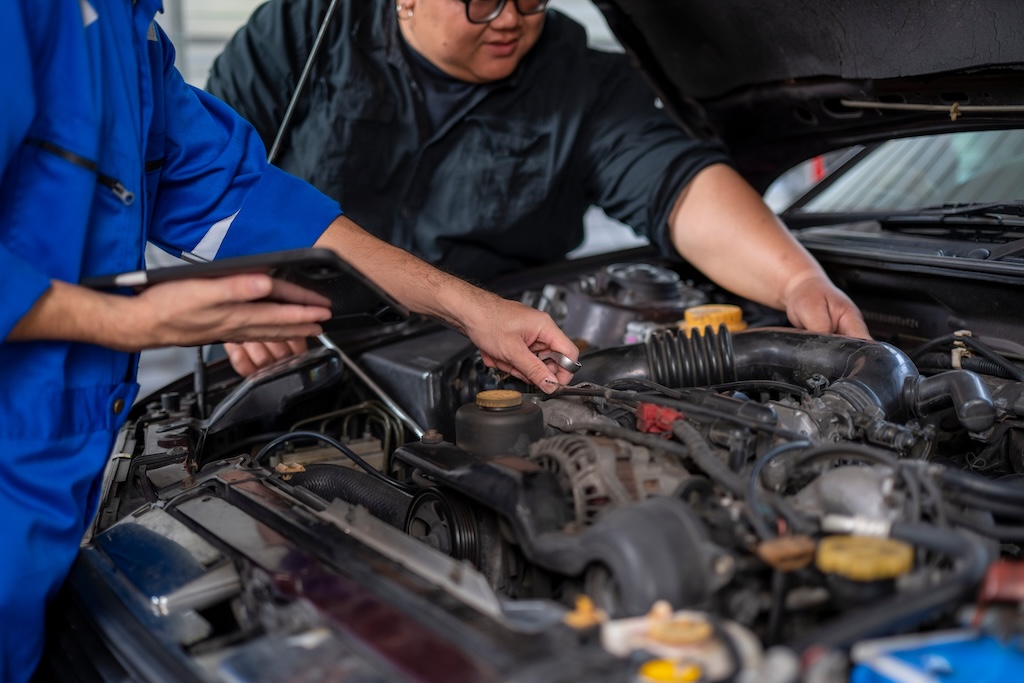
Overheating diagnosis is one of our most common call-outs across Sydney, and it’s one where the mobile approach genuinely helps. We come to your location, carry out a systematic diagnosis from coolant level through to pressure testing, thermostat function, and water pump condition, and give you a clear picture of the cause and what’s needed to fix it.
In most cases, the fix is on-site. Hose replacement, thermostat replacement, coolant flush and refill, and most pump replacements are all achievable at your location. If the diagnosis indicates something more serious, like a head gasket fault, we’ll tell you that directly and honestly, and advise on your best next steps.
Frequently Asked Questions About Engine Overheating
How long should I wait before opening the bonnet after my engine overheats? At least 20 to 30 minutes with the engine off, and only after the temperature gauge has returned to the cold end of the scale. If there’s still steam visible from under the bonnet, wait longer. The cooling system remains under pressure even after the engine is off, and a rapid pressure release from a hot cooling system can cause serious burns. Never open the radiator cap or coolant reservoir cap on a hot engine.
Can I use tap water instead of coolant in an emergency top-up? Distilled water is acceptable as an emergency measure to get the car to a safe location, but it should be replaced with the correct coolant mixture as soon as possible. Tap water contains minerals that can leave deposits in the cooling system and accelerate internal corrosion. Using tap water as a temporary measure once is far less damaging than driving on an overheating engine. Just don’t leave it in there.
How can I tell if my head gasket has been damaged by overheating? The most common signs of head gasket failure are: coolant that looks milky or frothy, indicating oil contamination; white smoke from the exhaust that persists beyond initial startup on a cold morning; engine oil on the dipstick that looks milky or has a mayonnaise-like consistency near the filler cap; coolant level that keeps dropping without any external leak visible; and bubbling in the coolant reservoir with the engine running, indicating combustion gases entering the cooling system. Any combination of these symptoms warrants immediate professional diagnosis.
What causes a car to overheat only when idling in Sydney traffic but not when driving? This specific pattern usually points to reduced airflow through the radiator at low speeds. The two most common causes are a blocked or partially clogged radiator, where the reduced airflow at idle is insufficient for adequate cooling, and a faulty radiator fan, where the cooling fan isn’t engaging correctly when the car is stationary. At highway speed, the airflow through the radiator is high enough to compensate. At idle in Sydney traffic, the fan is what provides the airflow, and if it’s not working, the temperature rises.
Does stop-start Sydney traffic cause more overheating problems than highway driving? Yes, for two reasons. Stop-start city driving reduces the airflow through the radiator, which is at its highest at highway speed. It also keeps the cooling system under sustained thermal stress for longer periods than highway driving, where speed helps with heat dissipation. A cooling system that copes adequately on a highway run may struggle in extended Sydney peak-hour queuing. This is why overheating problems often show up in summer city traffic rather than during longer drives.
How much does it typically cost to fix a car overheating problem in Sydney? It depends almost entirely on the cause. A thermostat replacement is typically $150 to $280, including parts and labour. A radiator hose replacement is $120 to $250. A coolant flush and refill is $100 to $200. A water pump replacement is $300 to $600 for most common vehicles, more for engines where pump access is complex. A radiator replacement is $500 to $1,200, depending on the vehicle. A head gasket repair, which is what overheating can cause if left too long, is $1,500 to $4,000 or more. The cost argument for fixing an overheating cause early is significant.
Mr Tune is a Sydney-based mobile mechanic. We work with clients across Sydney to ensure your car runs as smoothly as possible. Get in touch with us to see how we can help you.