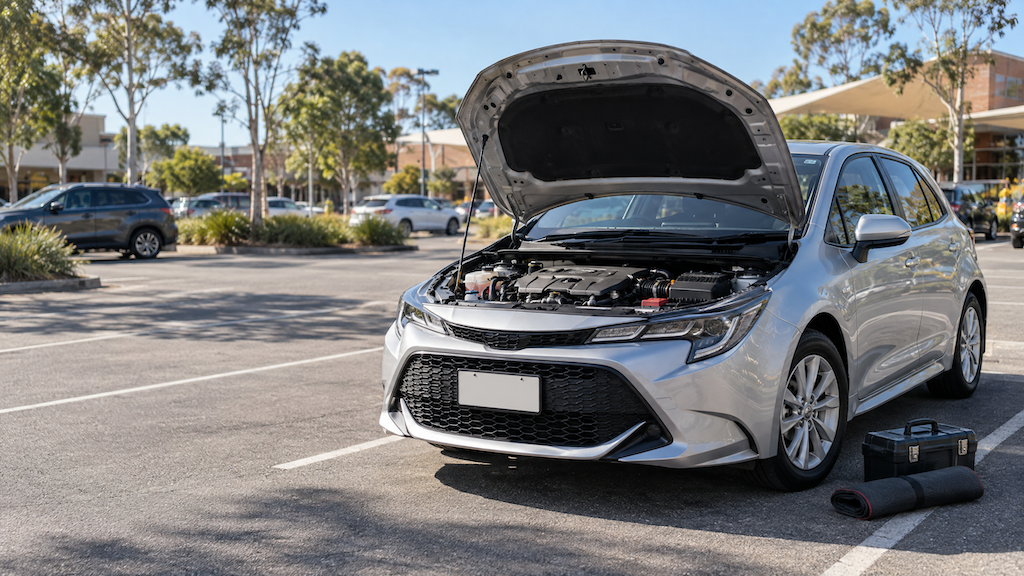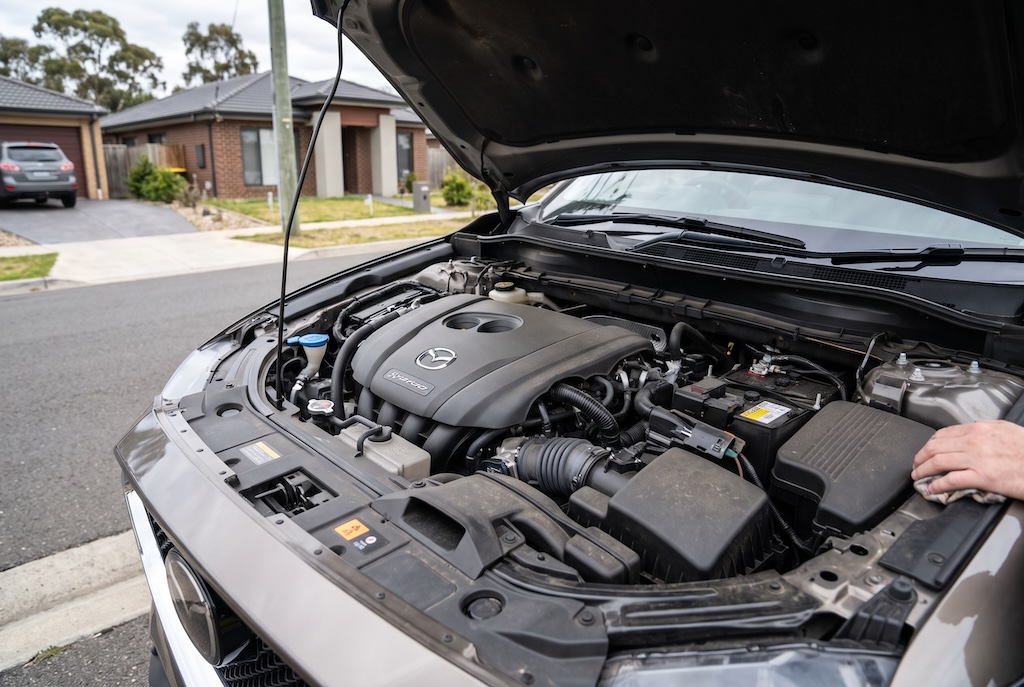
Open the bonnet of your car and there is a reasonable chance you can identify the windscreen washer reservoir because it has a little wiper symbol on it. Everything else is a collection of caps and reservoirs that mostly get ignored until something goes wrong.
That is understandable. No one teaches you this stuff unless you specifically go looking for it. But each of those fluids is doing something important, and when any one of them runs low or degrades past its useful life, the consequences range from annoying to expensive.
Here is what each fluid actually does, how to check it yourself, and when it needs changing in Sydney driving conditions.
Engine Oil: The One That Matters Most
Engine oil lubricates the moving parts inside your engine, reduces friction and heat, and carries contaminants to the oil filter where they are trapped. Without it, your engine destroys itself in minutes. With old or degraded oil, it wears out years faster than it should.
How to check it: Engine cold or at least fifteen minutes after driving. Pull the dipstick, wipe it clean, reinsert it fully and pull it out again. The level should sit between min and max. Fresh oil is amber and slightly transparent. Very dark brown oil that smells burnt has broken down and needs changing.
When to change it: Follow your manufacturer’s logbook interval, typically every ten to fifteen thousand kilometres or twelve months, whichever comes first. Sydney stop-start driving is harder on oil than highway driving because the engine rarely gets hot enough for long enough to burn off moisture and combustion byproducts. Short trips around suburbs like Newtown or Chatswood? Err toward the shorter interval.
A logbook service includes an oil and filter change as the core item at every interval.
Coolant: Temperature and Corrosion Protection
Coolant circulates through the engine, absorbs heat, and releases it through the radiator. It also contains inhibitors that protect aluminium and other metals in the cooling system from corrosion.
How to check it: The coolant level is visible through the translucent overflow reservoir, usually located near the radiator. The level should sit between the min and max marks when the engine is cold. Never open the radiator cap on a warm or hot engine.
When to change it: Most manufacturers recommend a coolant flush every two to five years depending on the coolant type. Coolant does not just run low; it degrades chemically over time, becoming acidic and less effective at both temperature regulation and corrosion protection. If your coolant looks murky, brown, or has visible particles in it, it is overdue for replacement.
Brake Fluid: The One People Forget About
Brake fluid transfers the force from your foot on the pedal to the brake components at each wheel. It is a hydraulic fluid and the system is sealed, so the level should not drop significantly over time. If it does, there is either a leak or your brake pads have worn down significantly, and the calliper pistons have extended.
Brake fluid absorbs moisture from the atmosphere over time. That moisture lowers the fluid’s boiling point, which matters in heavy Sydney traffic on a warm day when you are braking repeatedly. Degraded brake fluid can boil, creating vapour in the lines and causing a soft or unresponsive pedal.
The reservoir is a small translucent container on the driver’s side of the firewall. The level should be near the max line.
When to change it: Most manufacturers specify every two years regardless of distance, making this one of the most frequently skipped and most safety-relevant service items. A brake service with Mr Tune always includes a fluid condition check.
Transmission Fluid: Quietly Doing a Lot of Work
Transmission fluid lubricates the gears and internal components of your gearbox, and in automatics it also works as a hydraulic fluid. Degraded transmission fluid causes rough shifting, slipping, and eventually expensive gearbox damage.
On most modern cars, the transmission is sealed with no dipstick, so checking it requires a mechanic with the right equipment. Change intervals vary by manufacturer; some specify every sixty thousand kilometres and others claim lifetime fluid. In practice, the fluid degrades with heat and use, and most independent mechanics recommend changing it at sixty to one hundred thousand kilometres. Check your logbook for the specific requirement.
Power Steering Fluid: Becoming Less Common But Still Relevant
Many newer cars use electric power steering with no fluid to check, but a large number of Sydney vehicles still use hydraulic systems. The reservoir usually sits under the bonnet with a min and max marking, and the fluid should be clear to slightly amber.
Most manufacturers do not specify a regular change interval, but the fluid does degrade. If the steering feels heavier or you hear a whining noise when turning, the level and condition are worth checking at your next service.
Windscreen Washer Fluid: The One That Bites You in Traffic
Running out on a dusty summer day on the M7 with the sun directly ahead of you is a genuine visibility problem. Top it up with proper washer fluid rather than plain water. The detergents actually clean the screen rather than smearing, and plain water can promote algae growth that blocks the washer jets over time.
A Simple Check Schedule
- Engine oil: Check monthly, change per logbook interval (typically annually or every ten to fifteen thousand kilometres)
- Coolant: Check every few months, flush every two to five years
- Brake fluid: Check annually, change every two years
- Transmission fluid: Check at each service, change per manufacturer spec
- Power steering fluid: Check at each service
- Washer fluid: Top up as needed
A car service with Mr Tune covers every fluid in a single visit at your home or workplace across Sydney.
Frequently Asked Questions
How do I know if my car’s coolant needs changing? Check the colour and clarity. Fresh coolant is bright green, pink, or blue depending on the type. Coolant that has turned murky or brown, or has visible particles floating in it, has degraded and should be replaced. A chemical test strip can also measure the freeze and corrosion protection level remaining.
Is it normal for brake fluid to be low? A small reduction in brake fluid level over time is normal as brake pads wear and the calliper pistons extend further. A sudden significant drop in level suggests a leak somewhere in the brake system and warrants immediate inspection. If you are topping up brake fluid frequently, the system needs checking.
Can I mix different brands of engine oil? You can mix oils of the same viscosity grade in an emergency, but it is not ideal as a regular practice. Different formulations do not always combine cleanly. More important is using the correct viscosity grade specified by your manufacturer. Using the wrong grade, even of a good quality oil, does more harm than mixing brands of the same grade.
What happens if I drive with low transmission fluid? Low or degraded transmission fluid causes increased friction and heat inside the gearbox. In the short term, this leads to rough or delayed shifting. In the longer term, it accelerates wear on internal components and can cause costly gearbox damage. Transmission repairs are among the most expensive mechanical jobs on a passenger vehicle.
Does engine oil need changing if I have not driven many kilometres? Yes. Time matters as well as distance. Moisture, combustion byproducts, and chemical degradation happen even in oil that has not covered many kilometres. Most manufacturers specify a twelve-month maximum interval regardless of distance. If your car sits for long periods between short trips, that is actually harder on the oil than regular driving.
Can Mr Tune check and change fluids at my home? Yes. Fluid checks and changes are all part of a standard mobile service. Book a service with Mr Tune and the mechanic will work through all fluid levels and conditions at your location.
Mr Tune is a Sydney-based mobile mechanic. We work with clients across Sydney to ensure your car runs as smoothly as possible. Get in touch with us to see how we can help you.