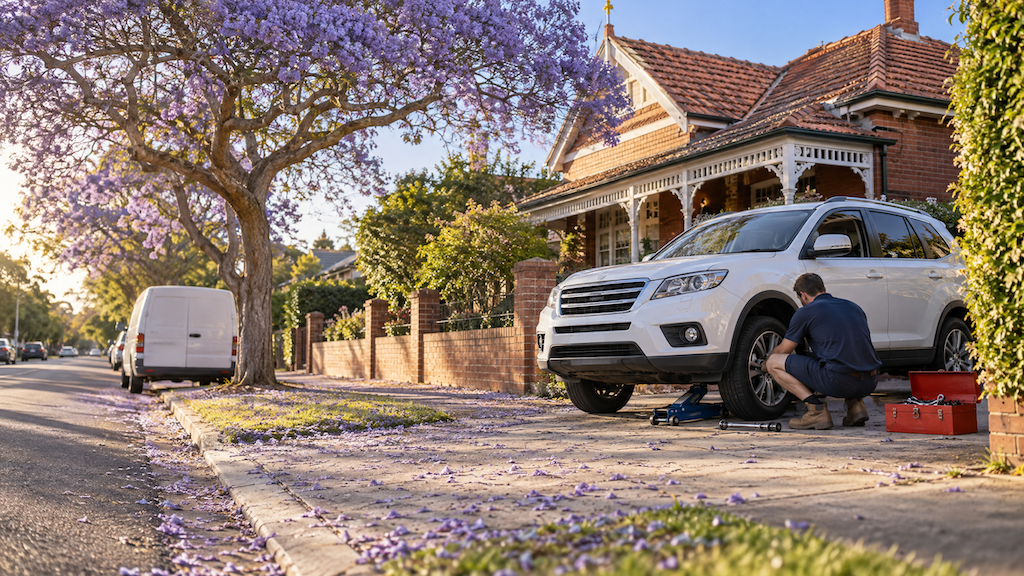
There’s a particular kind of frustration in calling a mechanic, describing a symptom, and being told it was just a loose fuel cap or low washer fluid. Not because the call wasn’t worth making, but because five minutes of basic checks beforehand could have saved the booking entirely, or at least given you a clearer picture of what to report.
On the other side of that, there’s value in being able to identify something genuinely worth acting on before it escalates. Most of the checks covered here take less than 15 minutes, require no mechanical training, and can be done in your driveway in Chatswood or your carpark in Pyrmont before the work week starts. None of them will turn you into a mechanic. But all of them will make you a better-informed car owner.
How to Check Your Car Battery Health Before Calling a Mechanic
The battery is responsible for starting the car and powering the electrical systems when the engine is off. A failing battery gives reasonably clear early signals if you know what to look for, and catching them early saves being stranded on a Tuesday morning.
The most accessible check is a voltage test. If you have a basic multimeter, connect the positive probe to the positive battery terminal and the negative probe to the negative terminal with the engine off. A fully charged battery should read between 12.4 and 12.7 volts. A reading below 12.2 volts suggests the battery is discharged or degraded. A reading below 12.0 volts means immediate attention is necessary.
If you don’t have a multimeter, you can do a basic load observation. Turn on the headlights for about two minutes with the engine off, then try to start the car. If the headlights dim significantly during the crank, the battery is struggling under load. Many automotive stores in Sydney, such as Repco and Supercheap Auto, offer free battery testing in-store if you want a definitive reading without buying equipment.
Signs your battery needs a mechanic’s attention:
- Voltage reading below 12.2 volts at rest
- Slow, laboured cranking on startup
- Clicking rather than cranking when you turn the key
- Headlights and interior lights are noticeably dimmer than usual
- The battery is more than four years old in Sydney’s climate
How to Check Tyre Pressure and Tread Depth at Home in Sydney
Correct tyre pressure is one of the highest-impact, lowest-effort maintenance tasks a driver can do. Underinflated tyres increase fuel consumption, accelerate tyre wear, and reduce handling precision. In Sydney’s summer heat, tyre pressure management matters even more because pressure increases as temperature rises.
Your vehicle’s correct tyre pressure is printed on a sticker inside the driver’s door jamb, not on the tyre sidewall. The number on the tyre is the maximum pressure the tyre can hold, not the pressure you should run it at. Check the tyre pressure cold, meaning before the car has been driven, for the most accurate reading. A basic tyre gauge costs under $15 and is worth keeping in the glovebox.
Tread depth can be checked with a 20-cent coin. Insert the coin into the tyre groove with the platypus bill pointing into the tread. If you can see the full bill above the tread, the tread depth is at or near the legal minimum of 1.5mm, and the tyre needs to be replaced. Road safety bodies recommend replacing them well before that point, around 3mm remaining, because wet-weather braking degrades significantly below that threshold.
Also, check the tyre visually for sidewall bulges, cracking in the rubber, particularly around the bead, and any embedded objects like screws or nails. A tyre with a nail in it that hasn’t lost pressure yet should be repaired rather than left, because it will eventually lose pressure, often at the worst possible moment.
How to Check All Fluid Levels in Your Car
Most fluid reservoirs under the bonnet are marked with minimum and maximum lines and are translucent enough to read without opening them. This check takes around three minutes and is worth doing monthly, not just when something feels off.
Engine oil is checked via the dipstick, either when the engine cold or after waiting five minutes after the engine has been turned off. Pull the dipstick out, wipe it clean, reinsert it fully, and pull it out again. The oil level should be between the minimum and maximum marks. If it’s near or below minimum, add oil of the correct specification before driving further. Also note the colour. Fresh oil is amber. Very dark brown or black oil that feels gritty suggests the oil is overdue for a change.
Coolant is checked via the plastic reservoir near the radiator. The level should be between the minimum and maximum marks when cold. If it’s repeatedly below minimum, there may be a slow leak in the cooling system worth investigating. Never open the radiator cap or coolant reservoir cap when the engine is hot.
Brake fluid sits in a small reservoir near the back of the engine bay on the driver’s side. It should be between min and max. A gradually dropping brake fluid level can indicate either normal pad wear, as pads wear down, the fluid level drops slightly, or a leak in the hydraulic system. New brake fluid is almost clear or pale yellow. Dark brown fluid indicates it’s absorbed moisture and needs changing.
Power steering fluid, if your car has a hydraulic system rather than electric, is in a small reservoir usually near the front of the engine bay. Electric power steering systems don’t have a fluid reservoir. If your steering feels heavy or makes a whining noise on full lock, check this first.
Windscreen washer fluid is the one reservoir where running low has no mechanical consequences, but Sydney’s summer brings enough dust, pollen, and insect debris that a functional washer system is genuinely useful for visibility.
How to Do a Basic Visual Inspection Around the Car
Walk around the car with purpose rather than glancing at it as you pass. You’re looking for things that have changed.
Check the tyres visually for obvious pressure loss, sidewall damage, or foreign objects. Check under the car for fresh fluid drops or puddles that weren’t there yesterday. Check the lights by turning them on and walking around the car, headlights, indicators, brake lights, and reversing lights. A blown brake light in Sydney carries a fine if caught by a highway patrol camera, and more importantly, reduces the warning you give drivers behind you.
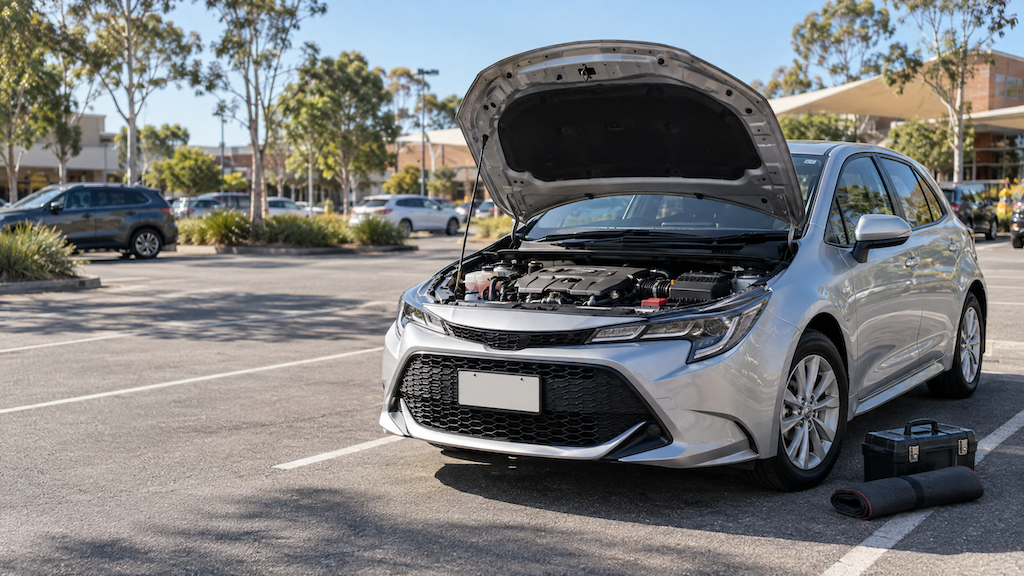
Lift the bonnet once a month and look for anything that has changed. Corroded battery terminals show as a white or blue-green powdery crust around the terminal connections. They can cause starting problems and electrical faults, and are easy to clean with a small brush and a little baking soda solution. Look for any hoses that appear cracked, split, or have white residue near the fittings, which can indicate a slow coolant weep.
Checks That Tell You to Call a Mobile Mechanic Right Away
These DIY checks are genuinely useful and can save you time and money. But they also have a clear limit. Here’s what each check looks like when the result means calling a mechanic rather than handling it yourself.
- Battery voltage below 12.0V: the battery needs professional testing and likely replacement
- Oil level below minimum: add oil immediately, then book to have the source of loss investigated
- Coolant level repeatedly dropping: don’t keep topping up without finding out why it’s disappearing
- Brake fluid level low with no recent pad change: have the hydraulic system inspected for a leak
- Tyre with embedded nail or screw: a mobile mechanic can assess and repair on-site
- Cracked or split hose under the bonnet: this needs replacing before it fails completely
In most of these cases, a mobile mechanic can come to your location and deal with the issue without you needing to organise alternative transport. For a Sydney driver already stretched for time, that matters.
What Basic Tools Are Worth Keeping in Your Sydney Car
You don’t need a workshop in your boot. But a few items are genuinely useful to have when something comes up away from home.
- A tyre pressure gauge and a portable inflator, or the knowledge of where your nearest petrol station air pump is
- A basic multimeter for battery checks, available for under $20
- A torch for inspecting under the car or bonnet in low light
- A bottle of the correct engine oil for your vehicle
- Jump cables or a compact lithium jump starter pack
- A reflective triangle or vest if you’re regularly on motorways
How Mr Tune Supports Sydney Drivers Who Do Their Own Basic Checks
Knowing how to do these basic checks makes you a better customer, not because mechanics need you to do their job, but because you’re able to give a mechanic precise information about what you’ve noticed and when. That makes diagnosis faster and more accurate, which saves time for everyone.
At Mr Tune, we work with Sydney drivers at all levels of car knowledge, from people who know nothing about engines to people who do their own oil changes and just want a qualified mechanic for the rest. We’ll always explain what we’re doing and why, and we’ll tell you when something you’ve noticed is a genuine concern versus something to keep an eye on.
Frequently Asked Questions About DIY Car Checks
How do I know if the tyre pressure reading I’m getting is accurate? Tyre pressure gauges can drift over time. If yours is more than a few years old and you’re not confident in its accuracy, most petrol stations have calibrated gauges on the air pump. Some automotive stores will check your gauge reading against a reference gauge for free. Digital gauges are generally more consistent than traditional dial gauges for home use.
Can checking my own fluid levels or tyre pressure invalidate my car warranty? No. Checking fluid levels, tyre pressure, or anything visual under the bonnet is observation, not modification. Topping up fluids with the correct specification product also does not affect the warranty. What can potentially affect warranty claims is using incorrect specification fluids or parts, and failing to have services performed on schedule by a qualified mechanic.
What colour should my brake fluid be, and when does it need to be changed? New brake fluid is almost clear or very pale yellow. As brake fluid ages, it absorbs moisture from the air, turning progressively darker from light yellow to amber to brown. Dark brown brake fluid has a noticeably lower boiling point than fresh fluid, which increases the risk of brake fade under heavy braking. Most manufacturers recommend a brake fluid change every two years, regardless of visual condition, because moisture absorption happens even before the colour change is obvious.
How do I figure out if my battery or my alternator is causing the problem? The key distinction is timing. If the car starts reliably after sitting overnight but fails to restart after a long drive, the alternator isn’t recharging the battery during driving. That points to the alternator. If the car struggles to start after sitting, particularly in the morning, the battery is more likely the issue. A multimeter check with the engine running should show 13.8 to 14.4 volts at the battery terminals if the alternator is charging correctly. Below that range, the alternator needs investigation.
How often should I do these basic checks between scheduled services? Oil level and a quick visual walk-around are worth doing monthly. Check tyre pressure monthly and before any long trip. Fluid levels should be checked every six to eight weeks as a rough guide. The battery is worth testing annually if it’s more than three years old, particularly before the Sydney summer. You’re not aiming for workshop-level inspection frequency, just enough to catch anything that changes noticeably between services.
What should I actually do if I find a nail in my tyre during a check? If the tyre is still holding pressure and the nail appears to be sealing the hole, you can carefully drive to a tyre shop or call a mobile mechanic. Don’t remove the nail yourself, as it’s the reason the tyre is still inflated. If the tyre is visibly losing pressure, change to your spare if you have one and are somewhere safe to do so. A mobile mechanic can come to your location and assess whether the tyre can be repaired or needs replacing.
Mr Tune is a Sydney-based mobile mechanic. We work with clients across Sydney to ensure your car runs as smoothly as possible. Get in touch with us to see how we can help you.