Sydney doesn’t get the kind of winters that justify a dramatic conversation about vehicle preparation. There’s no ice, no snow chains, no frozen windscreens in the morning. But that mild reputation creates a blind spot that catches a lot of Sydney drivers out every year.
Sydney winters are wet, dark in the mornings, and cold enough to stress car batteries, tyres, and braking systems in ways that don’t happen in summer. The temperature drop from a 30-degree January to a 10-degree July morning is significant enough to affect tyre pressure noticeably, push a borderline battery over the edge, and reveal braking issues that were masked in dry conditions. The cars that break down in winter are rarely the ones owned by people who did nothing for twelve months. They’re usually the ones that had a developing issue that the cooler months pushed into failure.
Here’s what’s worth checking before Sydney’s cooler months take hold.
Why Sydney Winters Are Harder on Cars Than Most Drivers Expect
The core issue is temperature differential rather than absolute cold. Sydney’s summers put significant heat stress on components, particularly batteries and cooling systems. When temperatures drop in May and June, components that have been running hot for months face a different kind of stress.
Batteries are the clearest example. A battery that was borderline in January, just managing to start the car every morning in the heat, loses capacity further as temperatures drop. Cold temperatures reduce the battery’s ability to deliver current, so a battery that was starting the car at 80 per cent of its rated capacity in summer may not have enough cold cranking power to turn the engine over on a 9-degree July morning.
Tyres lose pressure as temperatures drop. For every 10 degrees Celsius of temperature drop, tyre pressure decreases by roughly 1 PSI. A tyre that was correctly inflated at 33 PSI in January may be running at 30 PSI or below by July without the driver having noticed any change. Under-inflated tyres are less responsive in wet conditions, and Sydney winters bring enough rain to make this relevant.
Braking systems that performed adequately in dry summer conditions are asked to perform on wet roads, in cold temperatures, with the increased stopping distances that wet weather demands. A brake system with 20 per cent of pad life remaining has less margin in wet conditions than it did in dry.
Battery Check Before Sydney Winter: What You Need to Know
If your battery is more than three years old and hasn’t been tested in the last 12 months, before winter is the right time to do it. Not after the first cold snap when it fails to start on a Wednesday morning.
A proper battery test uses a load tester that simulates the current draw of starting the engine. A battery can show a healthy voltage at rest but fail under the load of actually cranking the engine, which is why a simple voltmeter check isn’t sufficient. Most mobile mechanics and many automotive retailers offer load testing.
What to look for beyond age:
- Slow or laboured cranking in the morning, particularly on the first start of the day
- Headlights are noticeably dimmer than they were six months ago
- Any interior electronics behaving erratically
- Visible corrosion on the battery terminals, which affects connection quality
A battery that fails a load test in April is much more convenient to replace than one that fails on a rainy Tuesday in July when you have somewhere to be.
Tyre Checks for Wet Sydney Winter Roads
Winter in Sydney brings rain, and rain on Sydney roads, particularly roads with diesel contamination around bus routes or old bitumen that gets polished smooth in traffic, significantly reduces tyre grip. The condition of your tyres going into winter matters more than most Sydney drivers account for.
Tread depth is the primary factor. The legal minimum in NSW is 1.5mm, but wet-weather braking performance degrades significantly once tread depth falls below 3mm. The difference in stopping distance between a tyre with 4mm of tread and one with 1.5mm on a wet Sydney road is not marginal. It’s the kind of difference that determines whether you stop before the car in front of you.
Tyre pressure is the other check. Do a cold pressure check in May or June and compare it against the vehicle’s specified pressure. If all four tyres are below specification, the cause is the temperature drop rather than a leak, and a straightforward inflation to spec is all that’s needed. If one tyre is consistently lower than the others, there may be a slow leak worth investigating.
Also, inspect the tyre sidewalls visually. Winter wet roads combined with Sydney’s abundance of potholes and construction zone surfaces put sidewall stress on tyres. A bulge in the sidewall, which indicates internal structural failure, is a tyre that needs immediate replacement regardless of the season.
Brake Performance Checks Before Sydney’s Wet Season
Brakes that have been adequate through a dry Sydney summer may not be adequate on wet winter roads. The physics are straightforward: wet roads reduce the friction coefficient between tyre and road, which means the braking system needs to be in better condition to achieve the same stopping distance.
Brake pad thickness below 3mm, or any grinding noise on braking, is worth addressing before winter. A brake inspection takes about 20 minutes and gives you a precise picture of where each corner is. A mobile mechanic can do this at your location without you needing to book the car in anywhere.
Also, check that the handbrake holds effectively on a slope. It’s not a check that gets done often, but winter mornings in Sydney’s hillier suburbs, Cremorne, Neutral Bay, parts of the northern suburbs, can reveal a handbrake that’s been adjusted loose over time.
Engine Coolant Checks for Sydney’s Cooler Months
Coolant does two jobs: it stops the engine from overheating in summer, and it protects against freezing in cold climates. In Sydney, the anti-freeze function matters less than in Canberra or the Blue Mountains, but the coolant condition still matters for the cooling system’s overall performance.
Coolant degrades over time. The corrosion inhibitors in the fluid break down, which leads to internal corrosion in the radiator, water pump, and heater core. Most manufacturers recommend a coolant flush every two to three years or 40,000 to 60,000 kilometres. Coolant that is brown or discoloured, rather than its original green, orange, or pink, has degraded and should be replaced.
Check the coolant level in the reservoir with the engine cold. If it’s been dropping between top-ups, there’s a leak somewhere in the system worth finding before winter driving in wet conditions makes a cooling system failure more dangerous.
Wiper Blade and Visibility Checks Before the Sydney Wet Season
Wiper blades are one of the most commonly neglected maintenance items. Sydney’s UV exposure through summer degrades the rubber compound even on blades that don’t get used much during the dry months. A blade that looks intact can still streak, skip, or leave smearing that significantly reduces visibility in heavy rain.
Test your wipers before the wet season rather than discovering they’re inadequate in the middle of a downpour on the M2. Run them across a wet windscreen and look for clean, streak-free wiping across the full sweep. Any juddering, streaking, or dry sections mean the blades need replacing.
Also, check the washer fluid level and that both front and rear washers are operating correctly. Visibility in Sydney peak-hour traffic in rain, where trucks and buses throw significant spray, depends on a functional washer and wiper system.
Lights Check for Shorter Sydney Winter Days
Sydney’s winter days are noticeably shorter than summer days, and morning and evening commutes that werein daylight in December happen in low light or darkness by July. A blown headlight or taillight that you haven’t noticed is more consequential in winter than in summer.
Do a lights check before winter: headlights on low and high beam, both indicators, both brake lights, reversing lights, and fog lights if fitted. Brake lights in particular are worth having checked by a second person, as you can’t see them yourself from the driver’s seat.
Some newer vehicles flag a blown globe via a dashboard warning indicator. Older vehicles don’t, and you may not know a light is out until a police officer tells you.
Book a Pre-Winter Check With Mr Tune Across Sydney
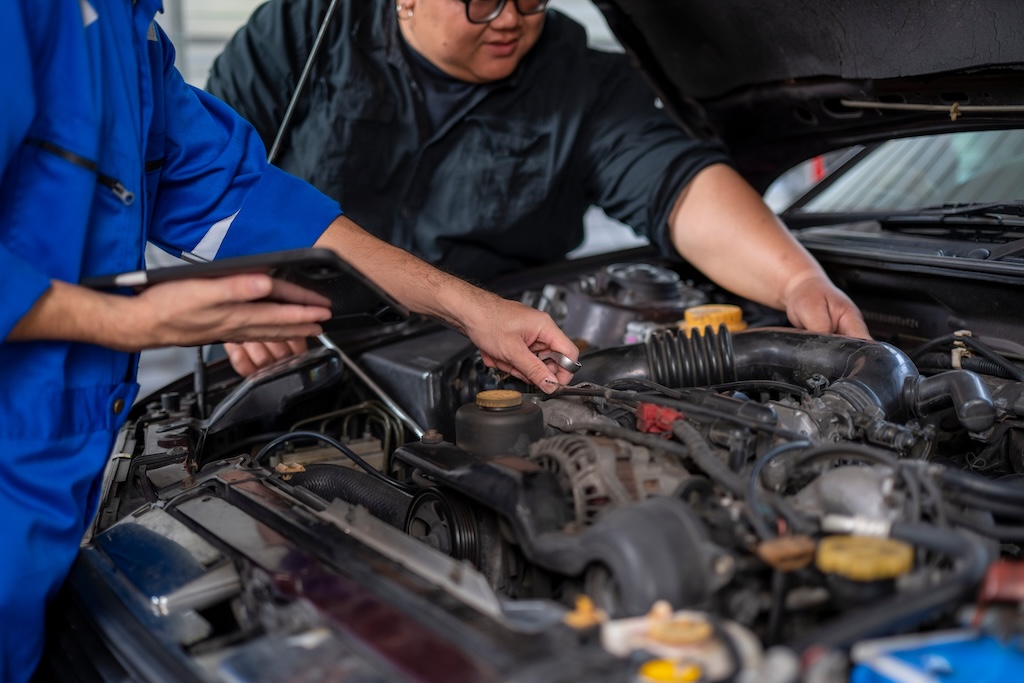
The most efficient way to cover all of these checks at once is a pre-winter inspection. At Mr Tune, we come to your location across Sydney and work through a thorough inspection covering battery, tyres, brakes, fluids, lights, and wipers, giving you a clear picture of what’s in good shape and what needs attention before the cooler months.
If anything needs attention, we can often take care of it in the same visit. No second booking, no workshop trip.
Frequently Asked Questions About Pre-Winter Car Checks in Sydney
Does Sydney actually get cold enough for car problems in winter? Yes, more than most Sydney drivers account for. Winter mornings in Sydney regularly reach 8 to 12 degrees Celsius, which is cold enough to push a borderline battery below its cold cranking threshold. Tyre pressure drops measurably in the temperature differential between summer and winter. And Sydney’s wet winters create road conditions that reveal brake and tyre deficiencies that dry summer roads masked.
How much does tyre pressure actually drop in a Sydney winter? As a rough guide, tyre pressure drops approximately 1 PSI for every 10-degree Celsius drop in ambient temperature. Sydney’s temperature difference between peak summer and mid-winter is typically 15 to 20 degrees. That translates to a 1.5 to 2 PSI drop across the entire tyre set without any actual leak. For tyres specified at 32 or 33 PSI, running at 30 or 31 PSI is a meaningful reduction in handling precision and wet-weather performance.
Should I use a different oil specification in winter for a Sydney climate? For most passenger vehicles in Sydney, the same oil specification is appropriate year-round. Modern multi-grade oils handle the temperature range Sydney experiences without issue. The manufacturer’s specified viscosity, found in the owner’s manual, is the right oil for your vehicle regardless of season. Where a different grade might be relevant is for high-altitude driving in significantly colder conditions, but for standard Sydney driving, the specification doesn’t change with the season.
How do I check if my car’s heating system is working properly before winter? Run the heater on full heat with the blower on high after the engine has reached operating temperature. If the air coming from the vents is genuinely hot, the heater is working. Lukewarm or cool air when the heater is set to maximum suggests either a low coolant level, a thermostat that’s stuck open, or a blocked heater core. A mobile mechanic can diagnose which one during a cooling system inspection.
When is the best time to book a pre-winter check in Sydney? April to early May is the ideal window. The summer heat stress period is over, winter driving conditions haven’t arrived yet, and you have time to address anything found without urgency. Leaving it until June or July means you may already be driving in wet conditions with unaddressed issues, and mechanic availability can be tighter once the cold-weather breakdown calls start picking up.
Can cold weather cause my car to consume more fuel in Sydney winters? Yes, measurably so. Cold engines run rich on startup, meaning the fuel mixture is heavier until the engine reaches operating temperature. Short trips in winter mean the engine spends a higher proportion of driving time in this warm-up phase. Cold ambient temperatures also increase air density, which slightly increases aerodynamic drag. In real-world Sydney commuting terms, a 5 to 10 per cent increase in fuel consumption in winter compared to summer is within the normal range.
Mr Tune is a Sydney-based mobile mechanic. We work with clients across Sydney to ensure your car runs as smoothly as possible. Get in touch with us to see how we can help you.