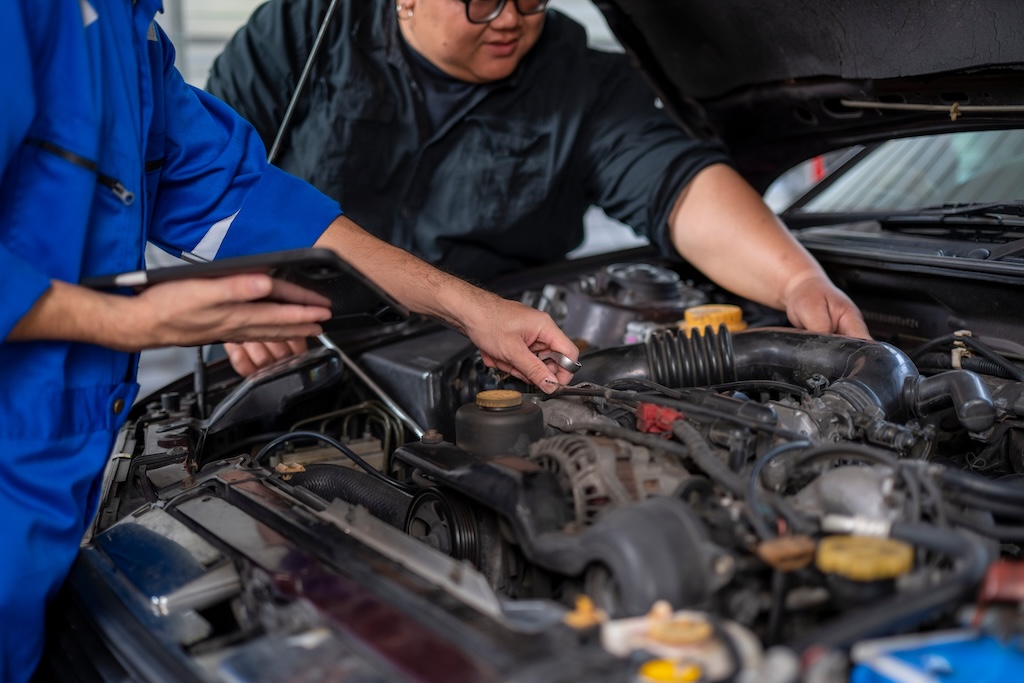
The plan is usually the same. School holidays arrive, you decide to drive to the South Coast, up through the Hunter Valley or out west past the Blue Mountains; the car prep gets left until the morning of departure. Or the day before if you’re organised. The kids are packed, the boot is full, and the question of whether the car is actually ready for 400 kilometres in 35-degree heat gets answered somewhere around Mittagong.
Summer road trips from Sydney put cars under a different kind of stress than daily commuting. The distances are longer, the ambient temperatures are higher, the load in the vehicle is heavier, and you’re further from help if something goes wrong. A car that handles the Parramatta Road to the city commute without complaint can develop problems it never showed you on a 500-kilometre run with a full car in January.
This checklist covers everything worth doing before you leave, with specific focus on the systems that summer long-distance driving stresses most: the cooling system, air conditioning, tyres, battery, and fluids. None of it is complicated. All of it is genuinely useful.
Cooling System Checks Every Sydney Driver Should Do Before a Long Summer Drive
The cooling system is the one that matters most for summer road trips, and it’s the one that causes the most expensive damage when it fails. An engine that overheats on the Hume Highway in January, surrounded by nowhere to stop safely and hours from Sydney, is a considerably worse outcome than the same problem discovered in your driveway before departure.
Check the coolant level in the reservoir with the engine cold. It should be between the minimum and maximum marks. If it’s low, top it up with the correct coolant type for your vehicle before checking why it’s been dropping. Consistently low coolant without an obvious cause, a coolant leak you’ve noticed or a puddle under the car, suggests the system is losing fluid somewhere and requires investigation.
Check the condition of the radiator hoses by squeezing them when cold. A healthy hose should feel firm and slightly pliable. A hose that feels very stiff, brittle, or has visible cracking is at risk of splitting under the pressure and temperature of extended highway driving. A hose that feels soft and mushy indicates the inner lining has deteriorated, and both warrant replacement before a long trip.
If your coolant hasn’t been flushed in more than two years or 40,000 kilometres, consider having it servicedbefore a significant summer trip. Degraded coolant has reduced heat transfer efficiency and depleted corrosion inhibitors.
Air Conditioning Service and Checks Before Your Sydney Summer Trip
Air conditioning failure on a summer road trip is a miserable situation, particularly with children in the car. More than a comfort issue, sustained high cabin temperatures in a car with a full load of passengers create genuine fatigue risk for drivers on long-distance summer routes.
Test the air conditioning thoroughly at least a week before your trip, not the morning of departure. Run it for 15 minutes at maximum cooling and assess whether it’s genuinely cold or just slightly cool. A system that was fine in winter may have lost refrigerant over the months it wasn’t being used heavily.
When the system is cooling but less aggressively than it was last summer, a regas, where refrigerant is topped up and the system pressure-tested, is usually the fix. When the compressor makes a rattling noise when the AC is engaged, or the system stops cooling when the car is idling at traffic lights but works when moving, there’s a more specific fault worth having assessed before you leave Sydney.
Also, check that all vents are blowing at the correct temperatures. A vent that blows warm when others blow cold can indicate a blend door fault in the HVAC system.
Tyre Preparation for Long-Distance Summer Driving from Sydney
Tyres on a summer road trip face a different set of stresses than city driving. Higher sustained speeds generate more heat in the tyre. A full car load increases the load rating requirement. Long distances mean a slow leak, which was negligible for a 20-minute commute, but becomes a flat within a few hours of driving.
Check tyre pressure with a cold reading before departure and inflate to the loaded vehicle specification, which is often higher than the standard specification for an unloaded vehicle. The loaded pressure recommendation is typically found on the tyre placard inside the driver’s door jamb and will specify a different, higher pressure for when the vehicle is loaded.
Check tread depth on all four tyres before any long trip. For summer highway driving, tyres with less than 3mm of tread are worth replacing before you leave rather than on the road. Also, check that your spare is inflated and in usable condition. A spare that hasn’t been checked in two years may have lost pressure and be useless when you need it.
Inspect each tyre sidewall for any bulges, cuts, or embedded objects. A nail in a tyre that hasn’t caused a pressure loss yet is a tyre that should be repaired before 400 kilometres of highway, not after.
Battery and Electrical System Checks for Summer Road Trips
Sydney summers stress batteries hard, and the start-stop of a long road trip, rest area stops, petrol stops, tourist stops (and starts), puts more demand on the starting system than a regular commute. A battery that’s marginal in the city can fail conclusively at a regional service centre somewhere outside Gundagai.
If your battery is more than three years old and hasn’t been tested this summer, do a load test before your trip. It takes 20 minutes, and either confirms the battery is fine or tells you to replace it before you go rather than on the road.
Also, check that the alternator is charging correctly. With air conditioning, a full complement of phone chargers, a GPS, and rear-seat screens all running, a summer road trip puts the highest electrical demand on the charging system of any driving scenario. An alternator that’s borderline on a standard commute may not keep up under full road-trip electrical load.
Oil and Fluid Level Checks Before Leaving Sydney
Check the engine oil level before departure when the engine is cold. If it’s low, top up to the maximum mark with the correct specification oil for your vehicle. Don’t leave with the oil level at minimum, because extended highway driving in summer heat burns slightly more oil than short city trips.
Check the brake fluid level. A low brake fluid level on a long trip with mountain passes, the Illawarra Escarpment, the Blue Mountains descent, or the New England Highway can indicate wear-related fluid level drop or a leak, and brakes that are fine on flat Sydney streets can overheat on extended descents.
Check the transmission fluid if your vehicle is an automatic and you have access to the transmission dipstick. Extended highway driving builds transmission fluid temperature, and degraded or low fluid makes heat management harder.
What to Pack in Your Car for a Sydney Summer Road Trip
Being prepared for a roadside situation is different from expecting one. A few practical items in the car make a real difference if something goes wrong outside mobile coverage or 50 kilometres from the nearest town.
- A litre of the correct engine oil for your vehicle
- A small bottle of coolant or distilled water for emergency top-up only
- A tyre pressure gauge and portable inflator, or knowledge of roadside stops with air
- Jumper cables or a compact lithium jump starter
- A basic torch and a reflective triangle or vest
- Sufficient water for all passengers for at least one day, which is relevant particularly for inland routes
- A fully charged phone and a car charger or power bank
When to Book a Pre-Trip Service With a Sydney Mobile Mechanic
The right time is at least a week before departure, not the day before. If something needs attention, you want time to deal with it properly rather than rushing a decision or leaving on a trip with a known issue.
A pre-trip inspection from a mobile mechanic covers everything on this checklist in one visit. Battery test, cooling system check, tyre inspection, fluid levels, brake assessment, and air conditioning check. If anything requires immediate attention, it can often be addressed in the same visit or with a quick follow-up booking.
At Mr Tune, we work with Sydney drivers preparing for summer trips across the range, from quick Southern Highlands drives to longer interstate drives. The inspection comes to you, takes about an hour, and gives you a clear picture of whether the car is ready. That peace of mind before a family road trip is genuinely worth the time.
Frequently Asked Questions About Summer Road Trip Preparation for Sydney Drivers
How far in advance should I book a pre-road trip car service? At least one week before departure, preferably two. You want enough lead time to address anything found during the inspection without panic. If a battery needs replacing, a hose needs changing, or brake pads need attention, you want those jobs done and the car driven for a few days before a long trip. Same-day pre-trip services are possible, but they don’t leave you any margin if something comes up.
Is it safe to use my compact spare tyre for an extended drive if I get a flat on a road trip? Compact spare tyres are rated for limited use at reduced speeds, typically 80km/h maximum and no more than 80 to 100 kilometres. They’re designed to get you to the next service point, not to drive on for hundreds of kilometres. If you get a flat on a summer road trip and fit the compact spare, the priority is finding a tyre shop or calling a mobile mechanic to fit a proper tyre before continuing. Full-size spare tyres have no such restriction if they’re in good condition and correctly inflated.
Does towing a caravan or trailer require any additional checks before a Sydney summer road trip? Yes. Towing adds significant load to the braking system, cooling system, and transmission. The tow vehicle brakes should be in excellent condition, not just adequate. The cooling system should be inspected specifically in the context of towing, as a radiator or thermostat that’s borderline unloaded may not cope with the additional thermal load. Tyre pressure should be adjusted to the loaded specification, and the tow ball, coupling, and safety chain should be checked before each day of driving.
What should I do immediately if my car starts overheating in a remote area outside Sydney? Turn off the air conditioning immediately to reduce engine load. If the temperature gauge doesn’t drop within a minute or two, pull over safely, turn the engine off, and do not open the bonnet or coolant cap while the engine is hot. Call a mobile mechanic or roadside assistance. Do not attempt to drive further on an overheating engine. The cost of a tow is significantly less than the cost of a head gasket failure or warped cylinder head from continuing to drive when overheated.
How does a fully loaded car affect fuel consumption on a Sydney summer road trip? A vehicle loaded near its capacity can see fuel consumption increase by 10 to 20 per cent compared to driving unloaded, depending on the vehicle type and load weight. Roof racks and cargo carriers add aerodynamic drag on top of the weight penalty. On a 500-kilometre trip, this is worth factoring into your fuel stop planning. Many regional routes between Sydney and popular holiday destinations have stretches of 100 kilometres or more between reliable fuel stops.
How much does tyre pressure change during a long highway drive in summer heat? Tyre pressure typically increases by 3 to 6 PSI during extended highway driving due to heat buildup in the tyre. This is normal, and manufacturers account for it in their pressure specifications. Do not bleed pressure from tyres that have just been driven on to bring them back to the cold specification. The correct approach is to check pressure only when tyres are cold, before driving or after the vehicle has been stationary for at least three hours. Hot tyre pressure readings will always be higher than cold readings.
Mr Tune is a Sydney-based mobile mechanic. We work with clients across Sydney to ensure your car runs as smoothly as possible. Get in touch with us to see how we can help you.