Most people find their mechanic the same way they find a plumber or an electrician. Someone they know recommends one, or they search online, pick whoever comes up first, and hope for the best. That works out fine sometimes. Other times it ends with a bill that feels wrong, a problem that comes back three weeks later, or the creeping suspicion that half the work on the invoice was not actually needed.
Sydney has hundreds of mechanics. Finding one who is qualified, honest, and actually good at what they do takes a bit more than a Google search. Here is what to look for and what to avoid.
Start With Licensing, Not Reviews
Reviews matter, but they should come second. The first thing to check is whether the business is properly licensed under NSW law.
In New South Wales, any business carrying out mechanical repairs for payment must hold a licence under the Motor Vehicle Repairs Act 1980, issued by NSW Fair Trading. This applies to the business, not just the individual mechanic, and it is a legal requirement. You can verify a current licence in about thirty seconds by searching the NSW Fair Trading licence register at fairtrading.nsw.gov.au.
The mechanic performing the work should also hold relevant trade qualifications. The standard for light vehicle mechanics in Australia is a Certificate III in Light Vehicle Mechanical Technology, completed through a formal apprenticeship. It is reasonable to ask about a mechanic’s training and experience, particularly for complex or expensive jobs.
What Transparent Pricing Actually Looks Like
A trustworthy mechanic gives you a clear price before any work starts. Not a ballpark. A specific quote for the specific job, including parts and labour.
Under the Australian Consumer Law, if a quote is given, the final charge cannot exceed it without your agreement. If additional work is identified during the job, the mechanic must contact you, explain what they found, and get your approval before proceeding.
Vague answers like “we will see what we find” are acceptable when a diagnosis is genuinely needed before a price can be given. Once the problem is identified, a clear number should follow. Ask for an itemised invoice as a matter of course for any repair of meaningful cost.
The Upsell Problem and How to Spot It
Every mechanic occasionally finds something during a service that genuinely needs attention. That is part of the job. A good mechanic will tell you what they found, explain why it matters, give you an urgency level, and let you decide.
What that should not look like is a list of five things presented as urgent with no real explanation of any of them. Watch for recommendations where no reason is given for why something needs replacing, pressure to approve work immediately, and suggestions that seem disconnected from the job you originally booked.
A mechanic who is comfortable with “I will think about it” or “can I get a second opinion” has nothing to hide. One who creates pressure around a decision is worth being cautious about.
Questions to Ask Before You Book
A few direct questions tell you a lot before you commit.
Can they provide a written quote before starting work? The answer should be yes. What qualifications does the mechanic performing the work hold? A confident, direct answer is a good sign. Is the business licensed under the Motor Vehicle Repairs Act? A straightforward yes, with the licence number available if you want it, is what you are looking for.
If your car is still under the manufacturer warranty, ask whether the service will be performed to the manufacturer’s specification and documented in the logbook. A mechanic who knows what they are doing answers that without hesitation.
Why Mobile Mechanics Can Actually Simplify the Trust Question
One of the things that makes trusting a workshop difficult is the gap between you and the work being done. You hand your car over, leave, and come back. Whatever happens in between is invisible to you.
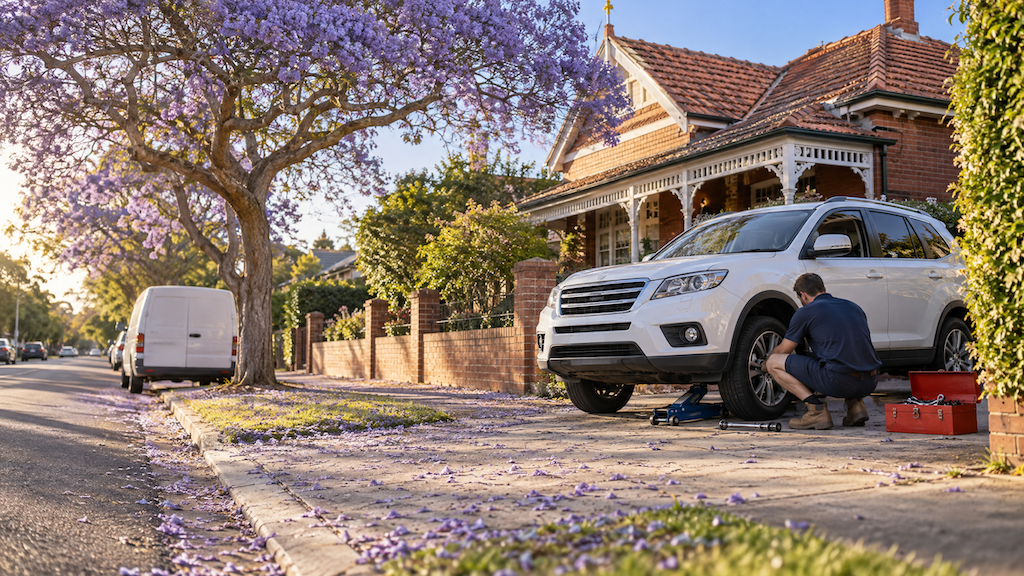
With a mobile mechanic, the work happens in front of you. You can watch, ask questions, and see exactly what is being done. The mechanic explains things directly with no intermediary, and there is no “we found some extra things while it was on the hoist” call that you cannot verify.
The same checks still apply. Confirm the licence, ask about qualifications, and get a clear quote before anything starts. But the onsite format removes one of the main structural reasons people distrust mechanics in the first place.
Red Flags That Should Make You Walk Away
If a mechanic cannot confirm the business holds a current NSW Fair Trading repairer licence, that is a serious concern. Operating without one is illegal in NSW.
If you receive a verbal quote and the final bill is significantly higher with no prior contact, that is not consistent with Australian Consumer Law.
If a mechanic tells you that using anyone other than the dealer will void your new car warranty, that is not accurate. Under Australian Consumer Law, that is not how warranties work in Australia.
If a part price seems unusually high and you cannot get a clear explanation of what is being fitted, ask before approving the work.
How to Check Reviews Properly
Once licensing and qualifications are confirmed, reviews become genuinely useful. Look for patterns rather than individual comments. Forty reviews with specific detail about quality and communication are more meaningful than ten that just say “great service.”
Look at how the business responds to negative reviews. A measured, honest response tells you more than ten five-star ratings. Word of mouth from people in your suburb who drive similar cars is still one of the most reliable signals of all.
Frequently Asked Questions
Do mechanics in NSW need to be licensed? The business carrying out motor vehicle repairs for payment must hold a current licence under the Motor Vehicle Repairs Act 1980 (NSW), issued by NSW Fair Trading. This applies to workshops, mobile mechanics, and any other business providing mechanical repair services for payment. You can verify a licence at fairtrading.nsw.gov.au.
Can a mechanic charge me more than the quote they gave? Under the Australian Consumer Law, a repairer cannot charge more than the agreed quote without your prior approval. If additional work is identified during the job, the mechanic must contact you, explain what was found, and get your consent before proceeding. Always get your quote in writing before work begins.
What qualifications should a car mechanic have in Australia? The standard trade qualification for light vehicle mechanics in Australia is a Certificate III in Light Vehicle Mechanical Technology, typically completed through a formal apprenticeship of three to four years. Some mechanics hold additional qualifications for specific systems or vehicle types. It is reasonable to ask about a mechanic’s training and experience before booking complex or expensive work.
How do I check if a mechanic is licensed in NSW? Search the NSW Fair Trading public register at fairtrading.nsw.gov.au under motor vehicle repairers. You will need the business name or licence number. The search is free and takes under a minute.
Is it legal for a mechanic to keep my car if I dispute the bill? This is a nuanced area. Under NSW law, a repairer may have a lien over a vehicle for unpaid work, meaning they can retain the vehicle until payment is made. However, this does not override your rights under Australian Consumer Law if the work was not carried out properly. If you have a genuine dispute over a bill, NSW Fair Trading has a dispute resolution process available.
What should I do if I think I have been overcharged by a mechanic? Start by raising the issue directly with the mechanic or business in writing. If that does not resolve it, you can lodge a complaint with NSW Fair Trading, which can investigate disputes involving licensed repairers. Keep all invoices, quotes, and written communications as evidence.
Mr Tune is a Sydney-based mobile mechanic. We work with clients across Sydney to ensure your car runs as smoothly as possible. Get in touch with us to see how we can help you.