Most Sydney drivers wait for one of two things before replacing their tyres. Either someone tells them to, or a tyre goes flat. Both are reasonable, but neither is ideal. There is a window before either of those things happen where your tyres are wearing out, your wet weather grip is getting worse, and you probably do not know it yet.
Tyres are the only part of your car in contact with the road. In Sydney, where summer storms can flood Parramatta Road in minutes and the Pacific Highway runs wet for days at a time, the condition of those four contact patches matters more than most people realise.
Here is how to know when it is time for new tyres, without waiting for a blowout or a failed inspection to tell you.
The Legal Minimum in NSW and Why It Is Not the Whole Story
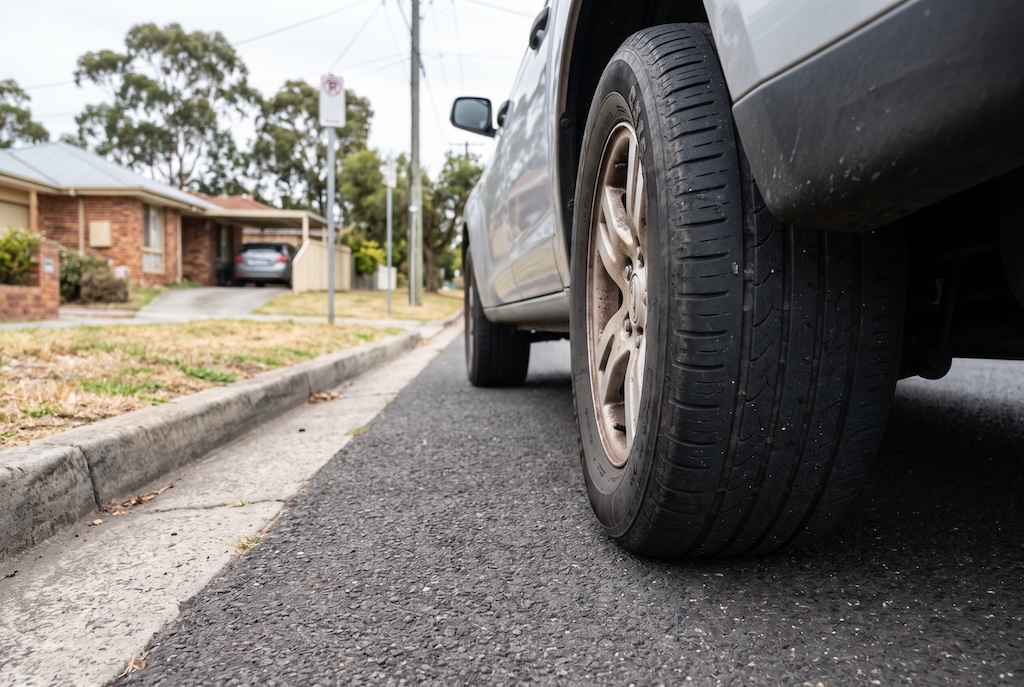
Under the Australian Road Rules as adopted in NSW through the Road Rules 2014, a tyre must have a minimum tread depth of 1.5mm across the central three-quarters of its width. Driving on tyres below this depth is an offence, and a vehicle with illegal tyres can be issued a defect notice and taken off the road.
That is the legal floor. In practice, most tyre manufacturers and road safety experts recommend replacing tyres well before they reach 1.5mm, because wet weather braking performance deteriorates significantly as tread wears down. At 3mm of tread, stopping distances in the wet are already considerably longer than with a new tyre. At 1.5mm, the difference is dramatic.
The quick check most people know is the twenty-cent coin test. Press a twenty-cent coin into the tread groove with the number facing in. If you can see the full number, your tread is getting low, and you should have the tyres properly measured. It is not a precise test but it is a useful indicator.
A proper tread depth gauge, available at any auto parts store for a few dollars, gives you an accurate reading. Anything under 3mm is worth monitoring closely. Under 1.5mm and the tyre needs replacing immediately.
How to Read the Age of Your Tyres
Tread depth tells you how worn a tyre is. The sidewall tells you how old it is. Both matter.
Every tyre made for the Australian market has a DOT code moulded into the sidewall. The last four digits of that code are the week and year of manufacture. A tyre showing 2419, for example, was made in the 24th week of 2019. Even if a tyre has plenty of tread remaining, age causes the rubber compounds to harden and crack, reducing grip and increasing the risk of failure.
Most tyre manufacturers recommend replacing tyres after ten years regardless of tread depth. Many recommend six years for tyres in regular use. Sydney’s climate accelerates this, particularly for cars parked outside in direct sun. UV exposure and heat cause sidewall cracking, sometimes called weather cracking or crazing, which weakens the tyre’s structural integrity even when the tread looks acceptable.
If your tyres are more than six years old and you cannot remember the last time they were replaced, check the DOT date and inspect the sidewalls for fine surface cracking. If you can see visible cracking, that tyre needs replacing regardless of the tread depth remaining.
What Uneven Wear Is Telling You
If one tyre is wearing faster than the others, or if the wear pattern across a single tyre is uneven, that is not just a tyre problem. It is a signal about something else.
Wear on the outer or inner edges only usually points to a wheel alignment issue. Your wheels are not sitting at the correct angle, so the tyre is contacting the road unevenly. Replacing the tyre without fixing the alignment means the new tyre wears the same way.
Wear in the centre with more tread on the edges typically means the tyre has been consistently over-inflated. The centre of the tread is carrying most of the load.
Wear on both edges with more tread in the centre suggests chronic under-inflation. The sidewalls are flexing too much and the edges are doing the work.
Feathering or cupping, where the tread blocks look rounded or scooped on one side, often points to suspension wear or a wheel balance issue.
The point is that tyre wear patterns are diagnostic. When Mr Tune carries out a car service, tyre condition and wear patterns are checked as part of the inspection, because what you see on the tyre often points to something that needs attention elsewhere.
When to Replace Now, Soon, or Just Monitor
Here is a practical framework for making the decision:
Replace immediately if the tread depth is at or below 1.5mm anywhere across the tyre, if you can see visible cords or structural damage, if there is a sidewall bulge or bubble, or if the tyres are over ten years old.
Replace soon if the tread depth is between 1.5mm and 3mm, if the tyres are six to ten years old with visible sidewall cracking, or if you are seeing a noticeable uneven wear pattern and planning a long drive.
Monitor if the tread depth is above 3mm, the tyres are under six years old, and the wear pattern is even. Check pressure monthly and inspect for damage regularly.
If you are unsure where your tyres sit, ask at your next service. A visual inspection and tread measurement take a few minutes and give you a clear answer.
Frequently Asked Questions
What is the minimum legal tyre tread depth in NSW? The minimum legal tread depth under the Australian Road Rules as adopted in NSW is 1.5mm across the central three-quarters of the tyre’s width. Tyres below this depth are illegal and the vehicle can be issued a defect notice. Most safety guidance recommends replacing tyres before they reach this point.
How do I check the age of my tyres? Look for the DOT code on the tyre sidewall. The last four digits indicate the week and year of manufacture. For example, 1523 means the tyre was made in the 15th week of 2023. Most manufacturers recommend replacing tyres after six to ten years regardless of remaining tread.
Can I drive on a tyre that has a sidewall bulge? No. A sidewall bulge or bubble indicates internal structural damage, usually from impact with a pothole or kerb. The tyre could fail suddenly and should be replaced immediately. Do not drive on it other than to move the vehicle to safety.
Why are my tyres wearing unevenly? Uneven tyre wear is usually caused by wheel alignment issues, incorrect tyre pressure, suspension wear, or wheel imbalance. Replacing the tyre without addressing the underlying cause means the new tyre will wear the same way. Have the alignment and suspension checked at the same time.
How often should I check my tyre pressure in Sydney? Once a month and before any long trip is a sound habit. Tyre pressure changes with temperature, and Sydney’s temperature swings between seasons can cause noticeable pressure variation. Use the pressure listed on the sticker inside the driver’s door jamb, not the maximum pressure printed on the tyre.
Can a mobile mechanic check my tyres? Yes. Tyre inspections, tread depth measurements, and pressure checks are all done as part of a mobile car service with Mr Tune. Tyre fitting and balancing require workshop equipment, but if your inspection reveals tyres that need replacing, your mechanic can advise on next steps.
Mr Tune is a Sydney-based mobile mechanic. We work with clients across Sydney to ensure your car runs as smoothly as possible. Get in touch with us to see how we can help you.