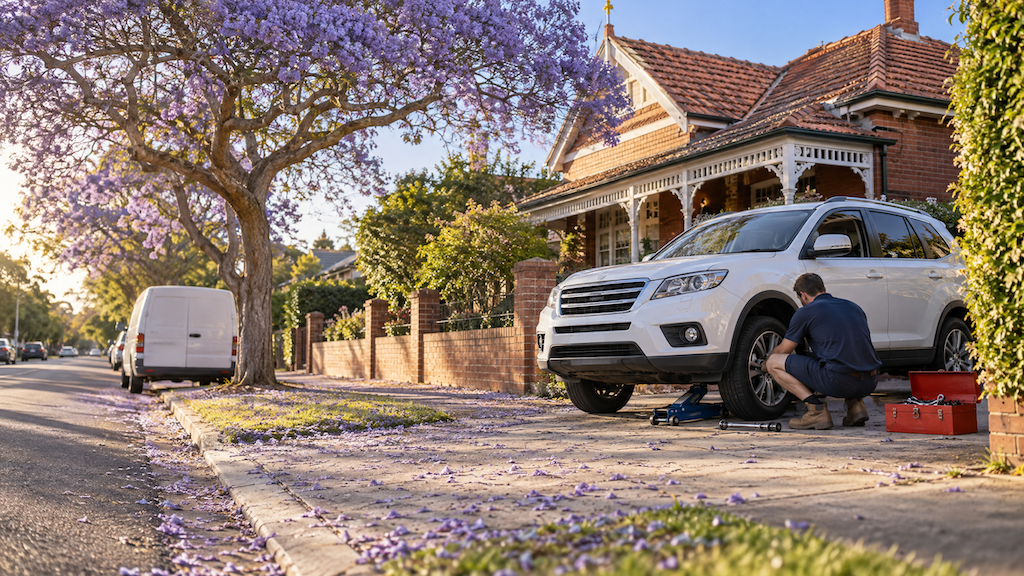
Complete Guide to Logbook Servicing by a Mobile Mechanic in Sydney

Logbook servicing is one of those terms used often in the car industry but rarely gets explained properly. Most new car owners are told they need it without being told exactly what it is, why it matters, or what happens if they skip it. And a common point of confusion: can a mobile mechanic actually do it, or does it have to go to a dealership?

This guide covers everything Sydney car owners need to know about logbook servicing, from what the service actually involves and why the schedule exists, to the legal framework that protects your right to have it done wherever you choose.

What Logbook Servicing Actually Is and Why It Exists

A logbook service is a scheduled maintenance service performed at specific intervals, defined by either the vehicle’s age or odometer reading, whichever comes first. The service follows a checklist prescribed by the vehicle manufacturer and is recorded in the vehicle’s logbook with a stamp, signature, and the date and odometer reading.

The logbook itself is a physical record that travels with the car. It documents the entire service history, which matters for two reasons. First, it demonstrates to the manufacturer that the car has been maintained according to their schedule, which is the basis of warranty compliance. Second, it represents significant value when selling the car. A full service history in a stamped logbook is one of the most reliable indicators of how a car has been maintained and commands a measurably higher resale price.

The intervals vary by manufacturer. Some vehicles use 10,000km or 6-month intervals, whichever comes first. Others use 15,000km or 12-month intervals. Some newer models use variable interval servicing, where an onboard computer calculates the service interval based on actual driving conditions. Your logbook and owner’s manual will specify what is relevant to your vehicle.

How Logbook Servicing Protects Your New Car Warranty in Australia

This is the most legally important aspect of logbook servicing for new car owners, and it’s an area where a lot of misinformation still circulates.

Under the Competition and Consumer Act 2010, Australian Consumer Law protects new car buyers from being forced to use dealer servicing to maintain their warranty. Manufacturers cannot void a warranty simply because the car was serviced by an independent mechanic rather than a dealership, provided the service was performed by a qualified mechanic using appropriate parts and was documented correctly.

This protection has been in place for years, but many dealers still imply, and occasionally state outright, that the warranty requires dealer servicing. That claim is not legally accurate in Australia. You are entitled to have your logbook service performed by any qualified mechanic, including a mobile mechanic, without affecting your statutory warranty.

The conditions for warranty protection are:

  • The mechanic performing the service must be qualified and licensed
  • Parts used must meet the manufacturer’s specifications, or be of equivalent quality
  • The service must follow the manufacturer’s logbook checklist for that interval
  • The logbook must be correctly stamped with date, odometer, and mechanic’s details

All four of these conditions can be met by a qualified mobile mechanic. The location of the service, your driveway rather than a dealership bay, is not a warranty-relevant factor under Australian law.

What a Logbook Service Actually Includes at Each Interval

The specific items covered in a logbook service depend on the manufacturer’s schedule and the interval number. Early intervals tend to be lighter, covering the basics. Later intervals, typically around 60,000km and 100,000km, are more comprehensive and may include items like spark plugs, timing belts, and coolant flushes.

A standard logbook service typically includes:

  • Engine oil and oil filter replacement: This is the core of every service interval. Oil quality degrades over time and distance, losing its protective properties.
  • Air filter inspection and replacement: A clogged air filter reduces engine performance and fuel economy
  • Cabin air filter inspection: Affects air quality inside the vehicle and air conditioning performance
  • Brake inspection: Pad thickness, rotor condition, and hydraulic system check
  • Fluid level checks: Coolant, brake fluid, power steering fluid, and windscreen washer fluid
  • Tyre condition and pressure: Tread depth and inflation across all four tyres, including the spare
  • Battery condition test: Voltage and load test to assess battery health and remaining life
  • Visual inspection: Under the bonnet and underneath for leaks, worn components, and anything unusual
  • Lights check: All lighting, exterior and interior
  • Logbook stamp: Recording the date, odometer, and mechanic’s details

At higher mileage intervals, additional items may include spark plug replacement, transmission fluid service, coolant flush, fuel system cleaning, and timing belt or chain inspection. Your logbook specifies what applies at each specific interval.

Why Sydney Drivers Are Choosing Mobile Mechanics for Logbook Services

The mechanics of a logbook service don’t require a workshop hoist. Oil and filter changes, fluid checks and top-ups, filter replacements, battery testing, brake inspections, and visual inspections can all be performed in a driveway or car park with professional-grade mobile equipment.

For Sydney commuters, the convenience is significant. A logbook service booked with a mobile mechanic means the car gets serviced at home, at work, or wherever it’s parked. You don’t lose a morning driving the car somewhere, arranging transport back, and then reversing the process when it’s ready. The service takes the same amount of time, but it doesn’t cost any of your own time to support it logistically.

For new car owners, particularly, this removes the pressure of fitting workshop hours into a working week. The car needs its service by 10,000km or 6 months, and that deadline doesn’t care whether you had a spare morning in the last month. Mobile logbook servicing gives you back the scheduling flexibility to book when it suits you, not when a workshop has a gap.

How Often Your Vehicle Needs a Logbook Service in Sydney Conditions

The manufacturer’s specified interval is the minimum. Sydney’s driving conditions sometimes make earlier attention worthwhile.

Sydney urban driving involves many short trips, stop-start traffic, and infrequent extended highway runs. Short trips are harder on engine oil than longer ones because the engine doesn’t fully warm up, which means water and condensation that build up during cold starts don’t fully evaporate from the oil. Over time, this degrades oil quality faster than the same kilometre count on a highway.

If your driving is predominantly short suburban trips in Sydney, some mechanics recommend not pushing to the outer edge of the kilometre or time interval. If you hit the time limit, say, six months before the kilometre limit, follow the time limit and book the service.

What Happens If You Miss a Logbook Service Interval

Missing a logbook service by a modest amount, a few weeks or a few hundred kilometres, is unlikely to cause mechanical damage if the car is otherwise running well. However, it does create a gap in the service record that appears in the logbook history.

More concerning is the warranty position. If a fault develops that falls under the manufacturer’s warranty and the vehicle has a missed or significantly overdue service, the manufacturer may investigate whether the lack of servicing contributed to the fault. In those cases, a gap in the logbook can complicate a warranty claim.

For cars no longer under manufacturer warranty, missing a service interval has no warranty consequences, but still has practical ones. Engine oil that’s been running too long loses its protective properties and accelerates internal wear. The cumulative effect of consistently missed or late services is shortened engine life.

If you’ve let a service lapse, the right answer is to book it now and have it done properly; don’t wait for the next interval. Complete the overdue service, document it correctly and move forward.

Book Your Sydney Logbook Service With Mr Tune

At Mr Tune, we perform logbook services across Sydney for all makes and models. We follow the manufacturer’s service schedule for each interval, use correct-specification parts and oils, and stamp and complete your logbook accurately. Your warranty is fully protected.

We come to your home, your workplace, or wherever your car is based. For most standard logbook services, the job is done in two to three hours without disrupting your day. Book when it suits you, not when a workshop has an opening.

Frequently Asked Questions About Logbook Servicing in Sydney

What happens if I have lost my car’s logbook? A lost logbook doesn’t erase the vehicle’s service history, but it does lose the physical record of it. For vehicles still under manufacturer warranty, contact the dealership network or manufacturer directly. They typically maintain digital records of services performed at their dealerships. For independent mechanic services, receipts and invoices can sometimes substitute. Replacement logbooks can be obtained through dealerships or some vehicle registries, though they start blank from the point of replacement.

Does my car require a logbook service or just a general service, and what is the difference? A logbook service follows the specific manufacturer-prescribed checklist for your vehicle at a specific interval and gets recorded in the logbook. A general service is less formally defined and typically covers the basics without being tied to a specific manufacturer’s schedule or documented in the logbook. If your car is under manufacturer warranty or within the age range where logbook history affects resale value, a logbook service is the right choice. General services suit older vehicles where the logbook history is already complete or less relevant to value.

Can I skip a logbook service interval and double up at the next one? Not effectively. Each logbook service interval has a time limit and a kilometre limit. Engine oil, for example, degrades over time, regardless of how far the car has been driven. If the 6-month or 12-month interval arrives, the oil needs to be changed even if the kilometre threshold hasn’t been reached. Skipping an interval and doubling up at the next one means the oil has been in the engine for twice the intended duration, which is not ideal for internal engine condition.

What’s the difference between time-based and distance-based service intervals? Most manufacturers specify both a time limit and a kilometre limit, with the instruction to service at whichever comes first. The time limit accounts for oil degradation over time regardless of usage. The distance limit accounts for accumulated wear and contamination from driving. Sydney drivers with low annual kilometres often hit the time limit before the distance limit. High-kilometre commuters typically hit the distance limit first. Either way, the interval that comes first is the one that triggers the service.

Do newer cars with variable service intervals still need regular logbook servicing? Yes. Variable service interval systems, also called service reminder systems or flexible service intervals, adjust the mileage between services based on how the car is being driven. The car still displays a service due indicator when the system calculates its time. Following that indicator constitutes the logbook service for that interval. It’s not an indication that servicing is optional, just that the interval is calculated dynamically rather than fixed at a set kilometre value.

Does a logbook service cover the same checks as the manufacturer’s full inspection schedule? A correctly performed logbook service follows the manufacturer’s checklist for that specific interval, which includes all the items the manufacturer specifies at that point in the service schedule. Some items only appear on the checklist at specific intervals, spark plugs and timing belts, for example, and won’t be covered at every service. The logbook itself lists what’s included at each service number. A reputable mechanic will follow that specific schedule rather than a generic checklist.


Mr Tune is a Sydney-based mobile mechanic. We work with clients across Sydney to ensure your car runs as smoothly as possible. Get in touch with us to see how we can help you.
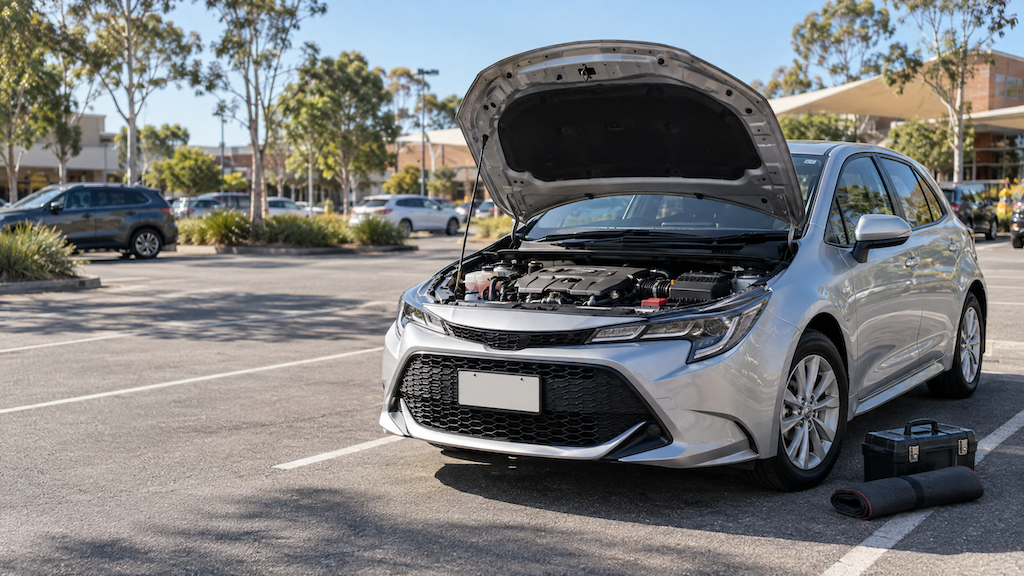
Car broken down on roadside

On-The-Spot Fixes: 8 Car Issues a Mobile Mechanic Can Resolve Without a Workshop

One of the most common questions people ask before booking a mobile mechanic is whether they can actually fix the problem at their location, or whether the visit will end with a referral to a workshop anyway. It’s a fair question. The answer depends on the job, and it’s worth being specific about what falls into which category.

The list below covers eight of the most common car issues that a qualified mobile mechanic can diagnose and resolve on-site, whether that’s your driveway in Kellyville, your office carpark in the CBD, or a quiet street in Newtown. For each one, the explanation details what the job entails, why it can be done without a workshop hoist, and what the process should look like.

1. Flat Tyre Repair and Tyre Replacement at Your Location

A flat tyre is the most obviously mobile-mechanic-friendly car problem. There’s no engine component to access, no hoist needed, and the tools required, a jack, wheel brace, and either a plug kit or a replacement tyre, are straightforward to transport.

A mobile mechanic can assess whether the flat is from a puncture that can be repaired or damage that requires a full replacement. For repairable punctures, a professional plug-and-patch repair is more reliable than the temporary sealant products most drivers have in their boots. For tyres that are damaged beyond repair, a mobile mechanic can often source and bring a replacement tyre to your location as part of the booking, fitting it on-site.

For drivers who have already fitted the spare and are running on a compact temporary spare, a mobile mechanic can bring the correct tyre, fit it, and have you back on a full set rather than a speed-restricted space-saver.

2. Car Battery Replacement Without the Workshop Visit

Battery replacement is one of the most common on-site jobs mobile mechanics perform across Sydney. Most batteries are accessible under the bonnet with standard tools and can be swapped in 30 to 45 minutes without any hoisting or specialist equipment.

The process involves testing the current battery under load to confirm it’s the problem rather than the alternator or another charging system fault, sourcing the correct replacement battery for the vehicle, and fitting it with all connections clean and secure. The battery type, group size, cold cranking amps, and terminal configuration must match the vehicle’s specification, which a professional will know or look up rather than guessing.

Some newer vehicles require a battery registration procedure after replacement, where the car’s battery management system is informed that a new battery has been fitted, so it adjusts charging accordingly. This is done via a diagnostic scan tool. It’s an easy step to miss if someone is swapping batteries without the right equipment.

3. Brake Pad and Rotor Replacement on Your Driveway

Brake pad replacement is one of the most common mobile mechanic jobs and is entirely feasible without a workshop. The wheels come off, the calliper is unbolted, the old pads are removed, new ones are fitted, and the assembly is reinstalled. For most vehicles on most driveways in Sydney, this takes one to two hours for a full front or rear axle.

Rotor replacement, when the discs have worn below minimum thickness or are warped, involves removing the calliper and bracket to slide the old rotor off and fit a new one. This is also achievable on-site. A mobile mechanic cannot machine or resurface rotors without a lathe. However, in most cases, replacement is the recommended approach anyway, once a rotor has worn to the point of needing attention.

After any brake work, the braking system needs to be bled if fluid work is involved, and the callipers need to be pumped back up before the car is driven. A thorough mobile mechanic will also check brake fluid condition and calliper slide pins as part of the job.

4. Engine Fault Code Diagnostics and Sensor Replacement

Dashboard warning lights are the most common reason people call a mechanic without knowing exactly what they require. A mobile mechanic with a professional-grade diagnostic scanner can connect to the vehicle’s OBD-II port, read every fault code stored across all systems, and interpret what those codes mean in the context of how the car is actually running.

Many warning light causes are due to sensor failures. Oxygen sensors, mass airflow sensors, throttle position sensors, crankshaft position sensors, and temperature sensors are all relatively accessible components that can be tested and replaced on-site. The scan tool reading confirms the fault, the test confirms the component, and replacement typically takes less than an hour for the most common sensors.

More complex engine management faults may require further investigation or component testing beyond what can be done on-site. A good mobile mechanic will clearly explain which category you’re in, rather than attempting work that needs workshop conditions.

5. Full Log Book Service and Oil Change at Your Home or Workplace

A standard logbook service is designed for exactly this kind of work. No hoisting required. The oil and filter change, fluid checks and top-ups, filter replacements, battery test, brake inspection, tyre check, and visual inspection that make up a standard service interval are all achievable with a well-stocked service van.

The same applies to a general service for vehicles not on a logbook schedule. Oil and filter, air filter, cabin filter, fluid top-ups, and a thorough inspection are all on-site jobs. Most standard logbook services take between 90 minutes and two and a half hours, depending on the vehicle and the specific interval requirements.

6. Cooling System Top-Up, Hose Replacement, and Minor Repairs

Cooling system issues ranging from a low coolant level through to a split hose or a leaking hose clamp can be dealt with on-site in most cases. A mobile mechanic can pressure-test the cooling system to identify leaks, identify failed hoses visually and with pressure testing, and replace radiator hoses, heater hoses, and fittings at your location.

What can’t always be done on-site is a full radiator replacement on vehicles where the radiator position requires significant disassembly of surrounding components, or a water pump replacement on some engine configurations where access requires removing timing covers. But for the hose replacements and coolant flushes that are the most common cooling system maintenance tasks, on-site is entirely practical.

7. Starter Motor Replacement at Your Location

Starter motor replacement is something most drivers assume needs a workshop, but in the majority of vehicles, it’s accessible from above or the side of the engine bay without requiring the car to be raised on a hoist. Some starter motors are located in positions that make them awkward but manageable from underneath without full hoist access.

For vehicles where the starter is in an accessible location, a mobile mechanic can disconnect the battery, remove the old starter, fit a new one, reconnect everything, and have the car start correctly within one to two hours. The job is straightforward once you have the right replacement unit and the correct tools. A diagnostic check before the replacement confirms the starter is actually the fault rather than a battery or wiring issue.

8. Alternator Diagnosis and Replacement On-Site

Alternator diagnosis is primarily electrical and is well within the scope of mobile mechanic tools. A combination of battery voltage tests at rest, voltage tests with the engine running, and a current output test under load gives a clear picture of whether the alternator is charging correctly.

Alternator replacement involves removing the drive belt, disconnecting the electrical connections, unbolting the alternator, fitting the new unit, and reassembling. On most vehicles, this is accessible from above the engine bay. Some engine configurations have the alternator in a lower position, which can make it more awkward on-site, but in the majority of common Sydney vehicles, it’s an on-site job.

What a Mobile Mechanic Cannot Do Without Workshop Equipment

Being clear about this is part of how mobile mechanics earn and maintain trust. Some jobs simply require equipment that isn’t practical to transport or operate outside a workshop setting.

  • Work requiring a full vehicle hoist: deep undercarriage access, full exhaust replacement, complex lower suspension work, and some transmission jobs.
  • Wheel alignment: requires a fixed alignment bay with laser measuring equipment.
  • Tyre fitting and balancing on bare rims: requires a tyre mounting machine and a wheel balancer.
  • Air conditioning full regas systems: some units are portable, some are not.
  • Engine rebuilds and cylinder head machining.

A reputable mobile mechanic will be upfront about which category your job falls into. If it can be done on-site, it will be. If it can’t, they’ll tell you that honestly rather than attempting it inappropriately or giving you a vague answer.

Book an On-Site Fix With Mr Tune Across Sydney

At Mr Tune, we carry the tools and parts for all eight of the jobs above. When you book, we confirm what the job involves and come prepared to complete it at your location. No unnecessary workshop trips, no half-done assessments that require a second visit somewhere else.

If a job turns out to be outside what we can do on-site, you’ll know that at the diagnostic stage, with a clear explanation of what’s needed and where to go from there.

Frequently Asked Questions About On-Site Car Repairs in Sydney

How long does a typical on-site repair take at my home or workplace in Sydney? It depends on the job. A battery replacement takes 30 to 45 minutes. A brake job on one axle is typically one to two hours. A standard logbook service takes one and a half to two and a half hours. Engine diagnostics with a straightforward sensor replacement can be done in under an hour. When you book, a good reputable mechanic will provide a time estimate, ensuring you can plan your day accordingly.

Does a mobile mechanic carry parts with them, or do I need to source the parts myself? For common parts like batteries, oil filters, air filters, and brake pads for popular vehicle makes, most mobile mechanics carry stock or can source and bring parts to the job as part of the booking. When you book, provide the vehicle make, model, year, and engine size so the mechanic can confirm parts availability and bring what’s needed. For less common vehicles or unusual fault parts, there may be a short lead time for sourcing.

Can a mobile mechanic work in my building’s underground carpark? Often yes, with some practical considerations. Standard underground carparks with typical clearance allow a service van to access the space. Security access may need to be arranged through building management. Some carparks have rules about mechanical work being performed on-site, which is worth checking with your body corporate or building manager beforehand. If the car park is accessible and work is permitted, a mobile mechanic can operate there.

Are on-site repairs covered by a warranty or guarantee? Reputable mobile mechanics stand behind their work. Parts typically carry the manufacturer’s warranty, which applies regardless of where the part is fitted. Labour warranty varies by provider but commonly covers the repair for a defined period. Ask about the warranty terms on the specific job when you book with Mr Tune. Always ensure you receive an invoice that documents the work done and parts used as a record for any future warranty reference.

What should I do if my car breaks down on a Sydney motorway and I need help quickly? First, safely move to the emergency lane or breakdown bay if possible and activate hazard lights. Call for roadside assistance if the vehicle needs to be towed or if you’re in a live traffic situation. Once you’re in a safe, accessible location, a mobile mechanic can come to you for diagnosis and repair. For breakdown situations on major motorways, the process is usually: get safe, remove the car from the live lanes, then deal with the mechanical problem, either on-site or after a short tow to a suitable location.

What happens if an on-site repair takes longer than originally estimated at my location? Good communication is the right answer here. If a mobile mechanic encounters something during a job that adds time, for example, a bolt that’s corroded and difficult to remove, or a secondary issue discovered during the repair, they should let you know immediately and discuss the impact on time and cost before continuing. No reputable mobile mechanic should spring a significantly different outcome on you at the end of a job without keeping you informed throughout.


Mr Tune is a Sydney-based mobile mechanic. We work with clients across Sydney to ensure your car runs as smoothly as possible. Contact us today to learn how we can help you.

Car on Road

How to Tell If Your Vehicle Needs Immediate Attention Before Calling a Mechanic

You’re driving home from work along the Pacific Highway, and something changes. Not dramatically, not a bang or a flash of smoke, just something slightly different. A new noise you can’t quite place. A faint smell that wasn’t there last week. The steering feels a fraction heavier than usual. And then comes the question almost every Sydney driver has faced at some point: Is this serious, or am I overthinking it?

Getting that call right matters. Miss a genuine warning sign, and you risk turning a minor repair into a major one. Catastrophise a non-issue, and you’re booking appointments you don’t need. This guide is designed to help you read what your car is actually telling you, so you can make an informed decision about whether to act immediately, monitor it, or book a service when it suits.

Warning Noises Your Car Makes and What Each One Means

Noise is the most direct communication channel a car has. Most mechanical problems produce a sound at some stage, and the nature of that sound, when it happens, at what speed, under what conditions, tells you a lot about what’s going on.

A grinding noise when braking is one of the clearest signals of an urgent problem. It means the brake pad material has worn through, and metal is contacting metal with every stop. This needs same-day attention, not a booking for next week. A squealing noise under braking is earlier-stage brake wear, still important but not yet critical.

Knocking from the engine, particularly at startup before settling, can indicate low oil pressure or worn engine internals. A light tapping that disappears once the engine warms up is often a valve train issue that needs investigation, but is not a pull-over-now emergency. A heavy, rhythmic knock under load is more serious.

Clunking or banging over bumps or speed humps usually points to suspension components, worn shock absorbers, a broken spring, or loose stabiliser bar links. The car will still drive, but handling and braking will be compromised.

A whining or howling noise that changes with vehicle speed, rather than engine speed, often suggests wheel bearing wear. Wheel bearings can fail gradually over thousands of kilometres, but once they start making noise, they should be inspected.

Noises to treat as urgent and act on today:

  • Grinding under braking
  • A loud bang or crack followed by pulling to one side
  • Rhythmic heavy knock from the engine under load
  • Scraping from a wheel that gets worse under braking
  • Hissing from under the bonnet at or after engine warmup

Dashboard Warning Lights That Require Immediate Action in Sydney

Modern cars monitor dozens of systems and communicate faults through the instrument panel. Not all warning lights carry the same urgency. Knowing which ones demand immediate action and which can be investigated at a convenient time prevents both unnecessary panic and dangerous inaction.

Red warning lights are the priority tier. A red oil pressure warning, a red temperature gauge, a red battery warning while driving, or any red symbol you don’t recognise should result in pulling over safely as soon as possible. Red means the system is at or beyond its operational limit right now, not trending toward it.

Orange or amber warning lights indicate a fault has been detected and logged. The check engine light, traction control off, ABS warning, and most emissions-related warnings fall here. These need investigation, but in most cases, the car can be driven carefully to a service point rather than abandoned on the spot.

A flashing warning light of any colour is more serious than a steady one of the same colour. A flashing check engine light specifically indicates an active engine misfire, meaning combustion is failing in one or more cylinders right now. Reduce engine load, avoid high revs, and get it looked at that day.

Warning lights are never to be ignored, even if the car seems fine:

  • Oil pressure warning (red): engine damage can occur within minutes at low oil pressure
  • Temperature warning (red): overheating causes rapid, expensive engine damage
  • Brake warning light: can indicate low brake fluid or a hydraulic system fault
  • Flashing check engine: active misfire risks catalytic converter damage

Fluid Leaks Under Your Car: How to Identify What You Are Looking At

Finding a puddle or a stain under your car is worth paying attention to, but not every drip is an emergency. The colour, consistency, and location of the fluid tell you a lot before a mechanic even looks at it.

Engine oil drips dark brown to black and has a slight viscosity. Fresh oil is amber. Either way, it tends to appear beneath the engine. A small drip that doesn’t grow is worth monitoring and mentioning at your next service. A spreading puddle under the engine is worth getting looked at promptly.

Coolant is the one that commands immediate attention if the volume is significant. It’s typically green, orange, pink, or blue depending on the type, and has a slightly sweet smell. A minor weep from a hose fitting can be monitored briefly. An actual puddle forming under the front of the car suggests the cooling system is losing fluid at a rate that will eventually cause overheating.

Brake fluid is light yellow and has a chemical, almost paint-like smell. It appears near the wheels or under the master cylinder at the firewall. Any brake fluid leak is an urgent concern because it directly compromises braking ability.

Clear water dripping from under the car after running the air conditioning is completely normal. That’s condensation from the evaporator drain. Nothing to worry about.

Performance Changes That Signal a Developing Problem

Sometimes there’s no noise, no light and no leak. The car just feels different. These subtle performance changes are often the earliest indication of something developing, and they’re the ones most commonly ignored until they escalate.

A car that takes noticeably longer to stop than it used to, or requires more pedal pressure than before, is showing brake wear or hydraulic system degradation. If it’s pulling to one side under braking, that’s a calliper or pad wear imbalance.

Fuel consumption that has increased by 10 to 15 per cent without any change in driving habits often signals an engine issue, a clogged fuel injector, a failing oxygen sensor, or a developing misfire. It’s easy to dismiss small consumption changes, but over a month of Sydney commuting, the cost adds up, and the underlying cause isn’t going to fix itself.

Rough idling, where the engine shudders or hunts at a standstill, is worth investigating. In most cases, it’s something addressable: a dirty throttle body, a failing idle control valve, or an ignition component starting to fail. Left alone, a rough idle tends to worsen.

Warning Signs You Can Monitor Versus Signs That Need Same-Day Attention

Most Sydney drivers don’t need a rule of thumb; they need a clear framework. So here it is.

Act today:

  • Any red warning light on the dashboard
  • Grinding under braking
  • Steering suddenly feels loose or unresponsive
  • Visible brake fluid leak near a wheel
  • The engine temperature gauge is approaching the red
  • Smoke or steam from under the bonnet

Book within a few days:

  • Steady amber warning light with no other symptoms
  • Slow oil leak or minor drip that isn’t growing
  • New vibration at highway speed
  • Squealing brakes with no grinding or pulling
  • Air conditioning is not as cold as it was

Mention at your next service:

  • Slight increase in fuel consumption
  • Intermittent noise you can’t reproduce
  • Very minor roughness at idle that clears quickly

What to Do Once You Have Spotted a Warning Sign

The most useful thing you can do after noticing a warning sign is document it. Note when it happens, under what conditions, whether it’s constant or intermittent, and whether it’s getting worse. This information makes a mechanic’s diagnostic process faster and more accurate.

If it’s an urgent symptom, pull over safely when you can and call a mobile mechanic. In many cases, a mobile mechanic can come to your location in Sydney, assess the problem on-site, and either fix it there or give you a clear picture of what needs to happen next without you needing to organise a tow.

If it’s something to monitor, book a service sooner than you otherwise would rather than waiting for the next scheduled interval. A qualified mechanic can assess whether the symptom is a developing issue or something minor during a routine inspection.

Book a Sydney Mobile Mechanic to Assess Your Warning Signs

At Mr Tune, we work with Sydney drivers who’ve noticed something and aren’t sure what to make of it. A diagnostic visit is often quicker and less complicated than people expect. We come to your location, assess what’s happening, and give you a clear and honest picture of what needs attention and what can wait.

No pressure, no upselling, no mysteries. If something is fine, we’ll tell you that too.

Frequently Asked Questions About Car Warning Signs

Should I pull over immediately if a warning light comes on while driving on the freeway? It depends on the light. A red warning light, particularly oil pressure or temperature, means pull over safely as soon as you can. An amber warning light that has just come on with no other symptoms, no noise, and no change in performance means you can drive carefully to a safe stopping point. If anything changes or the car starts running rough, treat it as urgent.

Are some warning light colours more serious than others in Australian cars? Yes. Red means the system has exceeded safe operating limits and requires immediate attention. Amber or orange means a fault has been detected and needs investigation. Green and blue lights are informational, telling you something is active. Yellow warning lights are advisory. The flashing versus steady distinction matters too, with a flashing light always being more serious than a steady one of the same colour.

What does it mean if my car makes a grinding noise only when turning? Grinding specifically during turns usually points to a CV joint. CV joints are part of the drivetrain and transfer power from the engine to the wheels. When the rubber boot surrounding the joint tears, grease escapes, the joint runs dry, and grinding on turns is typically the first symptom. It’s worth getting assessed, as a failed CV joint will eventually leave you unable to drive.

Can I temporarily ignore a small oil leak if my car seems to be running fine? You can monitor a very minor seep, but ignoring it entirely is risky. The problem with oil leaks is that they tend to worsen over time rather than stabilise, and you won’t necessarily notice the oil level dropping until it reaches a point that affects engine performance. If you’re monitoring a known leak, check the oil level weekly rather than waiting for the service interval.

What is the difference between steam and smoke from under the bonnet? Steam is usually white or light grey and dissipates quickly. It often indicates coolant contacting a hot engine surface, typically from a leaking hose or an overfull reservoir. Smoke is generally darker, persists longer, and has a burning smell. Blue-grey smoke usually means oil burning. Black smoke from the engine bay suggests an electrical or fuel-related issue. Steam is serious but usually not fire-related. Smoke warrants pulling over immediately.

My car passed its last service inspection, but is now showing symptoms. Does that mean the mechanic missed something? Not necessarily. Many car problems develop between service intervals rather than being present during them. A battery that tested within range six months ago can decline significantly over a Sydney summer. Brake pads that had 30 per cent material left at a May service can wear through by November on a Sydney commute. Service inspections are a snapshot of the car’s condition at that point, not a guarantee of future performance.


Mr Tune is a Sydney-based mobile mechanic. We work with clients across Sydney to ensure your car runs as smoothly as possible. Get in touch with us to see how we can help you.

At home car check

DIY Car Checks You Can Do Before Calling a Mobile Mechanic

There’s a particular kind of frustration in calling a mechanic, describing a symptom, and being told it was just a loose fuel cap or low washer fluid. Not because the call wasn’t worth making, but because five minutes of basic checks beforehand could have saved the booking entirely, or at least given you a clearer picture of what to report.

On the other side of that, there’s value in being able to identify something genuinely worth acting on before it escalates. Most of the checks covered here take less than 15 minutes, require no mechanical training, and can be done in your driveway in Chatswood or your carpark in Pyrmont before the work week starts. None of them will turn you into a mechanic. But all of them will make you a better-informed car owner.

How to Check Your Car Battery Health Before Calling a Mechanic

The battery is responsible for starting the car and powering the electrical systems when the engine is off. A failing battery gives reasonably clear early signals if you know what to look for, and catching them early saves being stranded on a Tuesday morning.

The most accessible check is a voltage test. If you have a basic multimeter, connect the positive probe to the positive battery terminal and the negative probe to the negative terminal with the engine off. A fully charged battery should read between 12.4 and 12.7 volts. A reading below 12.2 volts suggests the battery is discharged or degraded. A reading below 12.0 volts means immediate attention is necessary.

If you don’t have a multimeter, you can do a basic load observation. Turn on the headlights for about two minutes with the engine off, then try to start the car. If the headlights dim significantly during the crank, the battery is struggling under load. Many automotive stores in Sydney, such as Repco and Supercheap Auto, offer free battery testing in-store if you want a definitive reading without buying equipment.

Signs your battery needs a mechanic’s attention:

  • Voltage reading below 12.2 volts at rest
  • Slow, laboured cranking on startup
  • Clicking rather than cranking when you turn the key
  • Headlights and interior lights are noticeably dimmer than usual
  • The battery is more than four years old in Sydney’s climate

How to Check Tyre Pressure and Tread Depth at Home in Sydney

Correct tyre pressure is one of the highest-impact, lowest-effort maintenance tasks a driver can do. Underinflated tyres increase fuel consumption, accelerate tyre wear, and reduce handling precision. In Sydney’s summer heat, tyre pressure management matters even more because pressure increases as temperature rises.

Your vehicle’s correct tyre pressure is printed on a sticker inside the driver’s door jamb, not on the tyre sidewall. The number on the tyre is the maximum pressure the tyre can hold, not the pressure you should run it at. Check the tyre pressure cold, meaning before the car has been driven, for the most accurate reading. A basic tyre gauge costs under $15 and is worth keeping in the glovebox.

Tread depth can be checked with a 20-cent coin. Insert the coin into the tyre groove with the platypus bill pointing into the tread. If you can see the full bill above the tread, the tread depth is at or near the legal minimum of 1.5mm, and the tyre needs to be replaced. Road safety bodies recommend replacing them well before that point, around 3mm remaining, because wet-weather braking degrades significantly below that threshold.

Also, check the tyre visually for sidewall bulges, cracking in the rubber, particularly around the bead, and any embedded objects like screws or nails. A tyre with a nail in it that hasn’t lost pressure yet should be repaired rather than left, because it will eventually lose pressure, often at the worst possible moment.

How to Check All Fluid Levels in Your Car

Most fluid reservoirs under the bonnet are marked with minimum and maximum lines and are translucent enough to read without opening them. This check takes around three minutes and is worth doing monthly, not just when something feels off.

Engine oil is checked via the dipstick, either when the engine cold or after waiting five minutes after the engine has been turned off. Pull the dipstick out, wipe it clean, reinsert it fully, and pull it out again. The oil level should be between the minimum and maximum marks. If it’s near or below minimum, add oil of the correct specification before driving further. Also note the colour. Fresh oil is amber. Very dark brown or black oil that feels gritty suggests the oil is overdue for a change.

Coolant is checked via the plastic reservoir near the radiator. The level should be between the minimum and maximum marks when cold. If it’s repeatedly below minimum, there may be a slow leak in the cooling system worth investigating. Never open the radiator cap or coolant reservoir cap when the engine is hot.

Brake fluid sits in a small reservoir near the back of the engine bay on the driver’s side. It should be between min and max. A gradually dropping brake fluid level can indicate either normal pad wear, as pads wear down, the fluid level drops slightly, or a leak in the hydraulic system. New brake fluid is almost clear or pale yellow. Dark brown fluid indicates it’s absorbed moisture and needs changing.

Power steering fluid, if your car has a hydraulic system rather than electric, is in a small reservoir usually near the front of the engine bay. Electric power steering systems don’t have a fluid reservoir. If your steering feels heavy or makes a whining noise on full lock, check this first.

Windscreen washer fluid is the one reservoir where running low has no mechanical consequences, but Sydney’s summer brings enough dust, pollen, and insect debris that a functional washer system is genuinely useful for visibility.

How to Do a Basic Visual Inspection Around the Car

Walk around the car with purpose rather than glancing at it as you pass. You’re looking for things that have changed.

Check the tyres visually for obvious pressure loss, sidewall damage, or foreign objects. Check under the car for fresh fluid drops or puddles that weren’t there yesterday. Check the lights by turning them on and walking around the car, headlights, indicators, brake lights, and reversing lights. A blown brake light in Sydney carries a fine if caught by a highway patrol camera, and more importantly, reduces the warning you give drivers behind you.

Lift the bonnet once a month and look for anything that has changed. Corroded battery terminals show as a white or blue-green powdery crust around the terminal connections. They can cause starting problems and electrical faults, and are easy to clean with a small brush and a little baking soda solution. Look for any hoses that appear cracked, split, or have white residue near the fittings, which can indicate a slow coolant weep.

Checks That Tell You to Call a Mobile Mechanic Right Away

These DIY checks are genuinely useful and can save you time and money. But they also have a clear limit. Here’s what each check looks like when the result means calling a mechanic rather than handling it yourself.

  • Battery voltage below 12.0V: the battery needs professional testing and likely replacement
  • Oil level below minimum: add oil immediately, then book to have the source of loss investigated
  • Coolant level repeatedly dropping: don’t keep topping up without finding out why it’s disappearing
  • Brake fluid level low with no recent pad change: have the hydraulic system inspected for a leak
  • Tyre with embedded nail or screw: a mobile mechanic can assess and repair on-site
  • Cracked or split hose under the bonnet: this needs replacing before it fails completely

In most of these cases, a mobile mechanic can come to your location and deal with the issue without you needing to organise alternative transport. For a Sydney driver already stretched for time, that matters.

What Basic Tools Are Worth Keeping in Your Sydney Car

You don’t need a workshop in your boot. But a few items are genuinely useful to have when something comes up away from home.

  • A tyre pressure gauge and a portable inflator, or the knowledge of where your nearest petrol station air pump is
  • A basic multimeter for battery checks, available for under $20
  • A torch for inspecting under the car or bonnet in low light
  • A bottle of the correct engine oil for your vehicle
  • Jump cables or a compact lithium jump starter pack
  • A reflective triangle or vest if you’re regularly on motorways

How Mr Tune Supports Sydney Drivers Who Do Their Own Basic Checks

Knowing how to do these basic checks makes you a better customer, not because mechanics need you to do their job, but because you’re able to give a mechanic precise information about what you’ve noticed and when. That makes diagnosis faster and more accurate, which saves time for everyone.

At Mr Tune, we work with Sydney drivers at all levels of car knowledge, from people who know nothing about engines to people who do their own oil changes and just want a qualified mechanic for the rest. We’ll always explain what we’re doing and why, and we’ll tell you when something you’ve noticed is a genuine concern versus something to keep an eye on.

Frequently Asked Questions About DIY Car Checks

How do I know if the tyre pressure reading I’m getting is accurate? Tyre pressure gauges can drift over time. If yours is more than a few years old and you’re not confident in its accuracy, most petrol stations have calibrated gauges on the air pump. Some automotive stores will check your gauge reading against a reference gauge for free. Digital gauges are generally more consistent than traditional dial gauges for home use.

Can checking my own fluid levels or tyre pressure invalidate my car warranty? No. Checking fluid levels, tyre pressure, or anything visual under the bonnet is observation, not modification. Topping up fluids with the correct specification product also does not affect the warranty. What can potentially affect warranty claims is using incorrect specification fluids or parts, and failing to have services performed on schedule by a qualified mechanic.

What colour should my brake fluid be, and when does it need to be changed? New brake fluid is almost clear or very pale yellow. As brake fluid ages, it absorbs moisture from the air, turning progressively darker from light yellow to amber to brown. Dark brown brake fluid has a noticeably lower boiling point than fresh fluid, which increases the risk of brake fade under heavy braking. Most manufacturers recommend a brake fluid change every two years, regardless of visual condition, because moisture absorption happens even before the colour change is obvious.

How do I figure out if my battery or my alternator is causing the problem? The key distinction is timing. If the car starts reliably after sitting overnight but fails to restart after a long drive, the alternator isn’t recharging the battery during driving. That points to the alternator. If the car struggles to start after sitting, particularly in the morning, the battery is more likely the issue. A multimeter check with the engine running should show 13.8 to 14.4 volts at the battery terminals if the alternator is charging correctly. Below that range, the alternator needs investigation.

How often should I do these basic checks between scheduled services? Oil level and a quick visual walk-around are worth doing monthly. Check tyre pressure monthly and before any long trip. Fluid levels should be checked every six to eight weeks as a rough guide. The battery is worth testing annually if it’s more than three years old, particularly before the Sydney summer. You’re not aiming for workshop-level inspection frequency, just enough to catch anything that changes noticeably between services.

What should I actually do if I find a nail in my tyre during a check? If the tyre is still holding pressure and the nail appears to be sealing the hole, you can carefully drive to a tyre shop or call a mobile mechanic. Don’t remove the nail yourself, as it’s the reason the tyre is still inflated. If the tyre is visibly losing pressure, change to your spare if you have one and are somewhere safe to do so. A mobile mechanic can come to your location and assess whether the tyre can be repaired or needs replacing.


Mr Tune is a Sydney-based mobile mechanic. We work with clients across Sydney to ensure your car runs as smoothly as possible. Get in touch with us to see how we can help you.

Broken Down Car

What to Do When Your Car Won’t Start in Sydney: A Step-by-Step Guide

It’s 7:45 am. You’re in the driveway in Hornsby with a meeting at North Sydney at 9 am. You turn the key. Nothing. Or a click. Or a groan that dies halfway through the crank. Whatever the sound, the result is the same: your car isn’t starting, and your morning just became considerably more complicated.

A car that won’t start is one of those problems that tends to arrive at the worst possible moment. Fortunately, most cases of a car not starting in Sydney come down to a small number of common causes, and working through them in a logical order usually gets you to an answer quickly. Here’s exactly what to do, from the moment you realise there’s a problem through to deciding whether to call a mobile mechanic, roadside assistance, or try a jump start.

Step 1: Assess Your Safety and Immediate Situation

Before doing anything else, take stock of your location. If you’re on a Sydney motorway or busy road, safety is the priority before any mechanical diagnosis. Activate your hazard lights immediately. If you can safely move the car further off the road, do so. If you’re on the M1, M7, or similar, and cannot get the car off the carriageway, stay in the vehicle with your seatbelt on until roadside assistance arrives.

If you’re in your driveway, car park, or a quiet street, none of this applies, and you can skip to the diagnostic steps. However, if you’re in traffic, you need to deal with safety first.

Step 2: Identify What Is and Isn’t Happening When You Turn the Key

The sounds and symptoms you hear when you turn the ignition tell you a lot before you’ve looked at anything.

  • Nothing at all, no sound, no response: suggests a completely dead battery, a blown main fuse, or an ignition system fault.
  • A single loud click, no crank: typically a starter motor fault, or a battery with enough charge to trigger the solenoid but not crank the engine.
  • Rapid clicking: almost always a flat or very low battery.
  • The engine cranks but doesn’t fire: neither the battery nor the starter is working; the issue is fuel, ignition, or a sensor fault.
  • The engine cranks slowly and struggles: low battery charge or a battery that’s failing under load.

Note also whether any dashboard warning lights are behaving unusually. No lights at all when you turn the key to the accessory position means the battery is completely flat or there’s a connection issue. All lights on and staying on after cranking suggests a more complex fault.

Step 3: Basic Checks You Can Do Before Calling Anyone

A few quick checks can sometimes resolve the problem immediately or rule out obvious causes before you call for help.

Check the battery terminals. Open the bonnet and look at where the battery cables connect to the battery. White or blue-green corrosion crust on the terminals can interrupt the electrical connection enough to prevent starting, even with a healthy battery. If you have a cloth or a small brush and some water, cleaning corrosion off the terminals can restore a clean connection.

Check the gear selector. Automatic cars won’t start unless the selector is in park or neutral. If the car is in drive, it will not turn over. Also, check that the handbrake is engaged and that you’re pressing the brake pedal fully during the start attempt, which some models require.

If the car has a key fob for immobiliser disabling and the fob battery is low, the immobiliser may not disengage cleanly. Try holding the fob closer to the ignition barrel and attempt the start again. This solves more starting problems than people expect.

Check the fuel gauge. It sounds basic, but running out of fuel on a Sydney commute is more common than it should be, and a car that cranks strongly but doesn’t fire with the fuel light on is telling you clearly what’s wrong.

Step 4: Jump Starting Safely — What to Know Before You Try

If the symptoms point to a flat battery, a jump start may get you running again. But a few things are worth knowing before you start connecting cables.

Modern vehicles with complex electronics are more sensitive to incorrect jump-starting than older cars. Connecting cables in the wrong order or to the wrong terminals can damage sensitive electronics. The correct sequence is always: positive to positive on the flat battery, positive to positive on the donor battery or jump pack, negative to the donor battery or a metal earth point on the flat battery car, away from the battery itself, not to the flat battery’s negative terminal directly.

After connecting, run the donor vehicle or let the jump pack charge for two to three minutes before attempting to start the flat vehicle. If it starts, run it for at least 20 to 30 minutes of driving to allow the alternator to recharge the battery before turning the engine off again. Turning the car off shortly after a jump start and then expecting it to start again usually results in the same flat battery problem immediately.

If the car starts but the battery warning light remains on during driving, the alternator may not be charging correctly. Get it checked before the battery runs flat again.

Step 5: When to Call a Mobile Mechanic Rather Than Roadside Assistance

Roadside assistance is useful for getting the car to a workshop. A mobile mechanic is useful for diagnosing and fixing the problem at your location without the car needing to go anywhere.

If the car won’t start and you’re at home or at work, calling a mobile mechanic is often the faster and more efficient option. They can come to your location, test the battery and alternator properly, and in most cases replace the battery on-site if that’s what’s needed. You’re back on the road without any towing, without any workshop visit, and without any logistics to coordinate.

Roadside assistance makes more sense when you’re in a location where a mobile mechanic can’t safely or practically work, a live motorway lane, for example, or when the fault is something more complex that requires workshop equipment to address.

If the car won’t start and you genuinely have no idea why, a mobile mechanic with a diagnostic scan tool can connect to the car’s onboard system and read any fault codes logged, which is often the fastest path to an answer.

The Most Common Reasons Sydney Cars Fail to Start

In order of frequency for Sydney conditions:

  • Flat or failed battery: accounts for the majority of no-start calls. Sydney summer heat accelerates battery degradation, and short commuter trips don’t always give the alternator enough run time to recharge the battery fully between starts
  • Starter motor failure: the starter either fails to engage or fails under load. Common on higher mileage vehicles or those where the battery has repeatedly run the starter hard on a weak charge
  • Alternator failure: the car started fine all week, then died after a longer drive with a heavy electrical load. A classic sign that the alternator has stopped charging
  • Fuel delivery fault: car cranks normally but doesn’t fire. It can be a failed fuel pump, a blocked fuel filter, or a pressure regulator fault
  • Immobiliser or key fault: particularly common on vehicles where the key fob battery is old, or the transponder is starting to fail
  • Flat tyre noticed only after the car won’t move: technically not a starting fault, but often the actual blocker for the morning’s plans

How Mr Tune Handles Sydney No-Start Calls

A no-start call is one of the most common things we deal with at Mr Tune, and it’s also one of the situations where mobile mechanics genuinely shine. We come to your location, run a full diagnostic, test the battery, alternator, and starter, read any fault codes, and in most cases, resolve the issue on-site without you needing to do anything except let us know where you are.

Same-day and next-day bookings are available across Sydney. If you’re stuck right now and need someone, get in touch, and we’ll tell you honestly what we can do and when.

Frequently Asked Questions: What to Do When Your Car Won’t Start in Sydney

Is it safe to push-start a modern automatic car in Sydney? No. Push starting, or bump starting, only works on manual transmission vehicles. Attempting to push-start an automatic can damage the transmission. If you have an automatic and the battery is flat, a jump start is the appropriate approach. If the battery is too far gone for a jump start, you need a replacement battery before the car will start reliably.

How long should I run my car after a jump start to recharge the battery? At minimum, 20 to 30 minutes of actual driving at varying engine speeds, not idling. The alternator charges the battery most effectively above idle, so driving rather than sitting still is more efficient for recharging. In Sydney’s stop-start traffic, this takes longer than it does on an open road. If the battery is genuinely flat rather than just discharged from a short trip, it may need a dedicated battery charger for a full recharge rather than just alternator charging.

Should I call a mobile mechanic or roadside assistance when my car won’t start at home? If you’re at home or in a safe, accessible location, a mobile mechanic is usually the better call. Roadside assistance gets the car to a workshop, where it joins a queue, and you need to sort transport both ways. A mobile mechanic diagnoses and fixes the issue at your location, without any towing and without you going anywhere. For the most common no-start cause, a flat or failed battery, a mobile mechanic can have you back on the road within an hour in most cases.

Can a mobile mechanic come to a Sydney motorway, or is there a restriction? For a live motorway lane, roadside assistance with tow capability and emergency lighting is more appropriate for safety reasons. For a motorway rest area, a breakdown bay, or a service centre, a mobile mechanic can attend. If you’re in a breakdown bay on the M5 or M7, for example, a mobile mechanic can come to you. The key factor is whether the location allows safe working access.

My car won’t start at a shopping centre after hours. What should I do? Call a mobile mechanic if you’re in a safe location and the centre’s car park is accessible. Most outdoor and multi-storey carparks are accessible to service vehicles. Describe the symptoms clearly when you call so the mechanic can bring the most likely parts needed. For underground carparks with restricted height access or security-locked after hours, a roadside assist tow may be the only practical option to get the car somewhere workable.

The engine cranks fine, but the car just will not fire. What is usually causing this? A strong crank with no start rules out the battery and starter motor. The most common causes in this scenario are a failed fuel pump, which you may also notice as a lack of the usual brief hum from under the car when you first turn the key to accessories, a crank position sensor fault, a failed ignition coil pack, or a security system fault preventing the injectors from firing. A diagnostic scan will usually identify the fault code quickly.


Mr Tune is a Sydney-based mobile mechanic. We work with clients across Sydney to ensure your car runs as smoothly as possible. Get in touch with us to see how we can help you.